Prior to arriving in this renown city I realized that while the name is evocative of Asian grandeur, elephants and a hot sun overhead, I didn’t actually know anything about it. For the past few hundred years it has indeed been the economic and academic hub of Burma, and is the last royal capital of the country. It was constructed at the desire of a King Mindon, who was attempting to fulfill a prophecy that a center of Buddhism would be built at the precise location (at the foot of Mandalay Hill) on the 2,400th anniversary of Buddhism. From just about Day One the city has tread a rough and uphill road through modern history, thanks primarily to British colonialism. In fact, you can still find artifacts looted from the Royal Palace in the Victoria and Albert Museum in London. During WWII it was converted by the British into a fort, who then relocated their Air Force to defend India just in time for the Japanese to bomb the entire city to hell. The palace and over half of the buildings in the city were leveled.
In 1981 a fire razed 6,000 buildings and left 36,000 people homeless and in 1984 (three years later…imagine that) another fire destroyed 2,700 buildings and left another 23,000 people homeless. They have continued to have major fires as recently as 2009.
Which brings us to the present day Mandalay. Flat, concrete and full of right angles, the city is a long shot from what it once was. It is a city rebuilt as quickly and “economically” as possible after being pillaged and bombed for half a century. It is still a hub and it still contains gems, but you have to do a little digging.
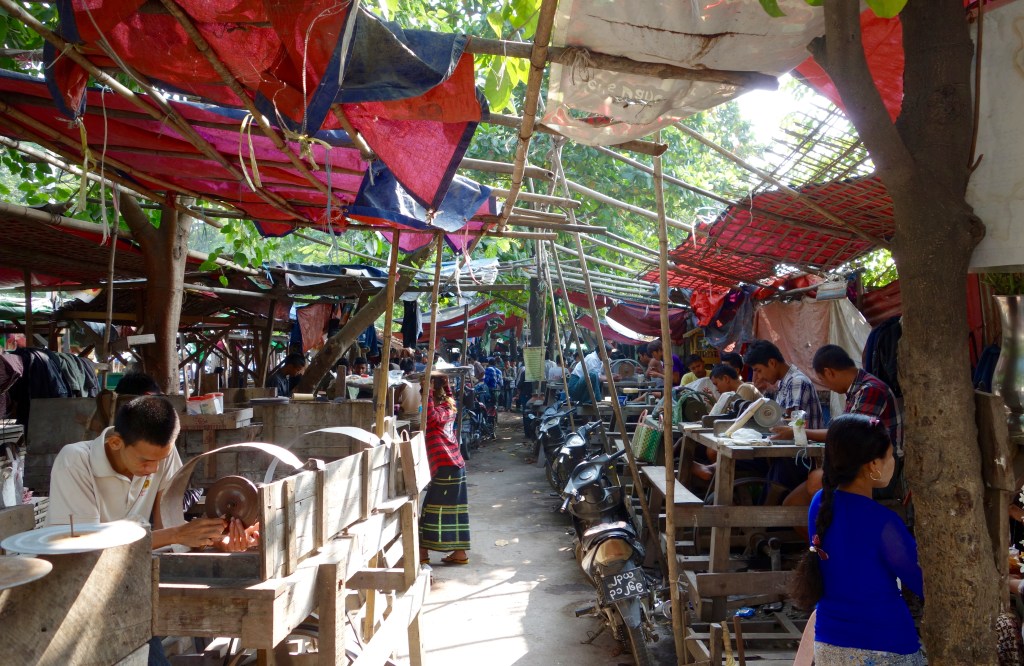
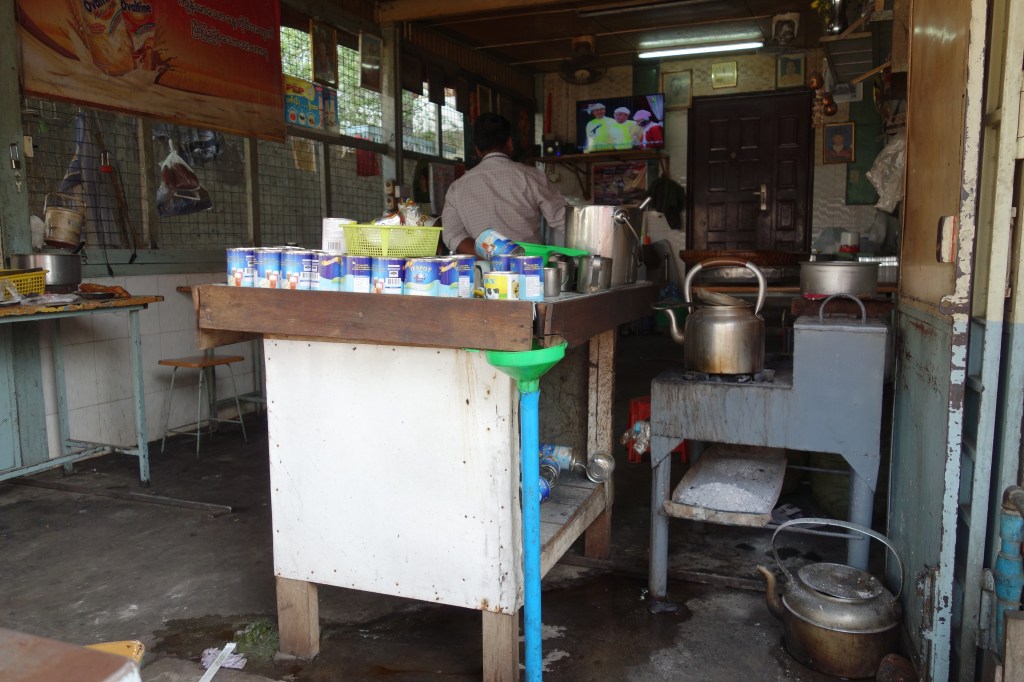
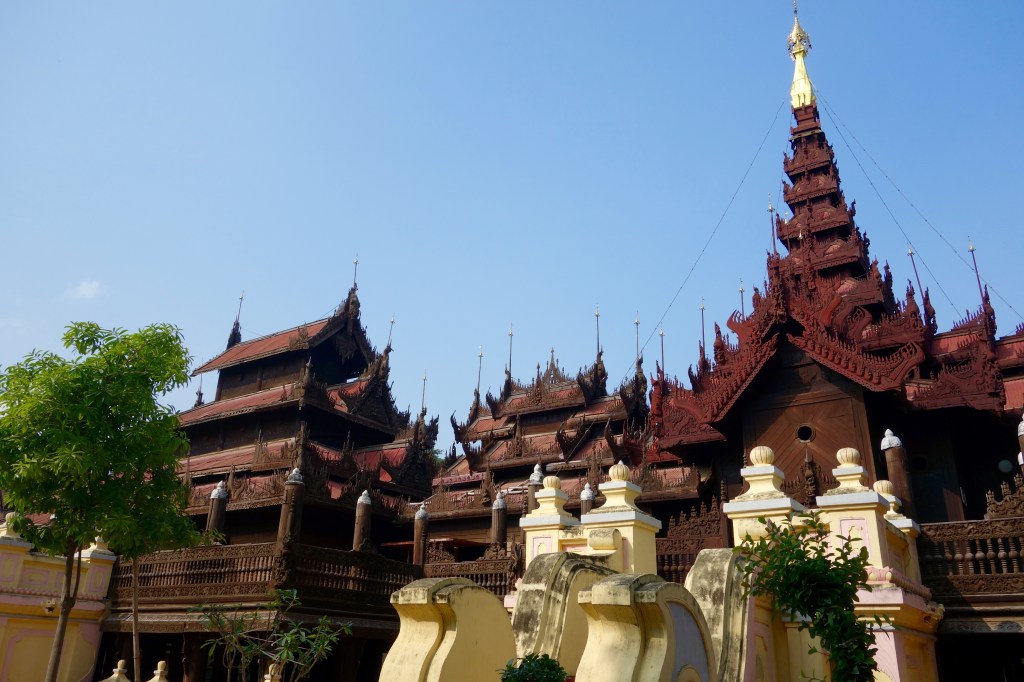
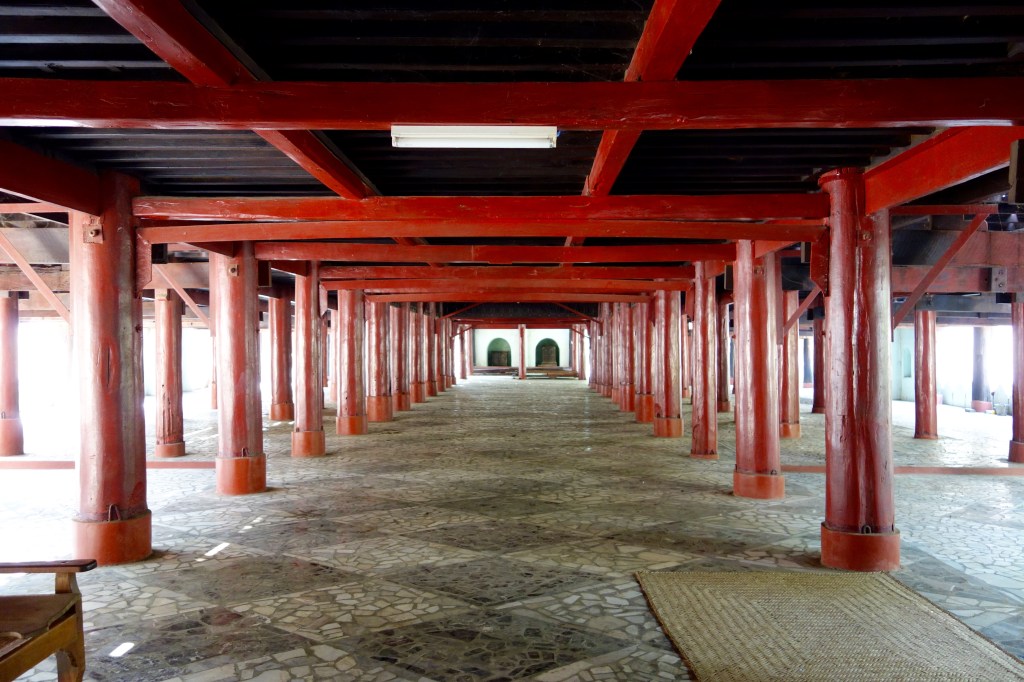
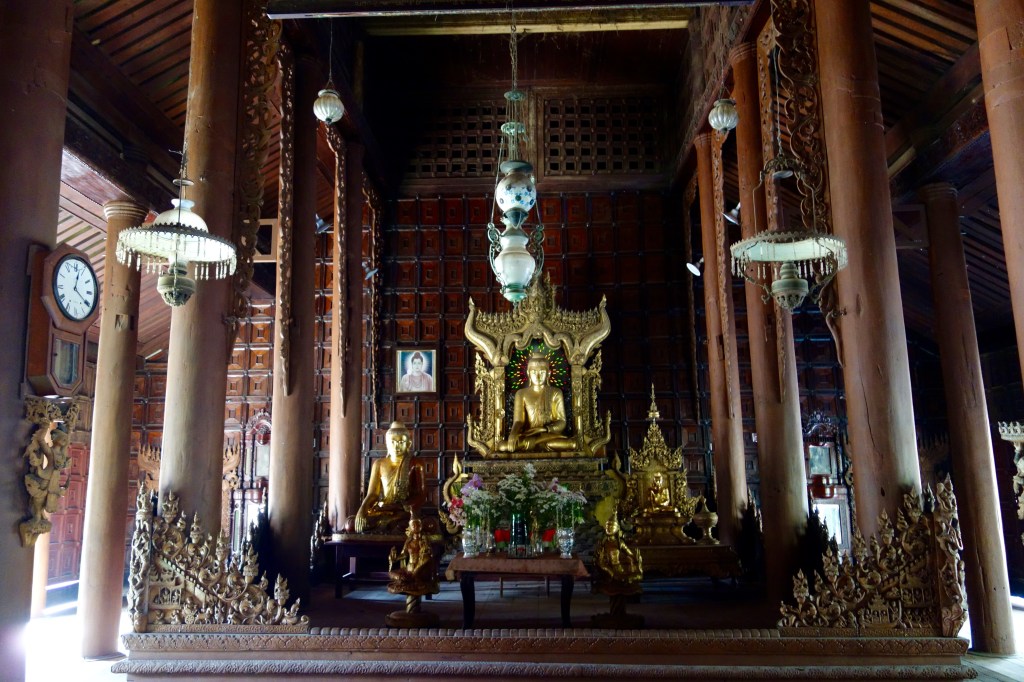
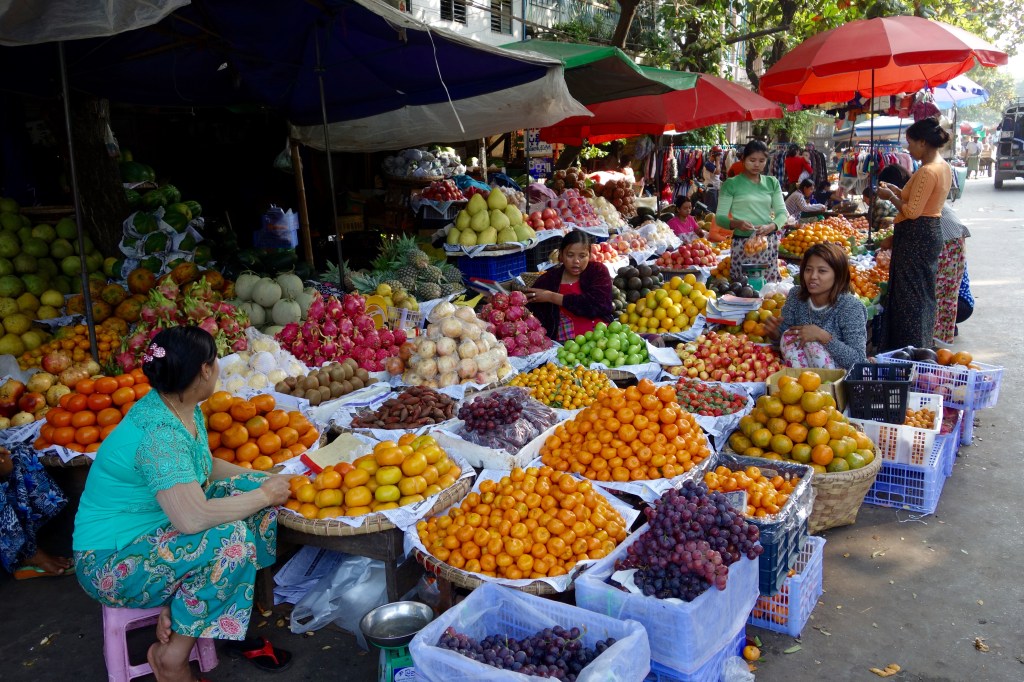
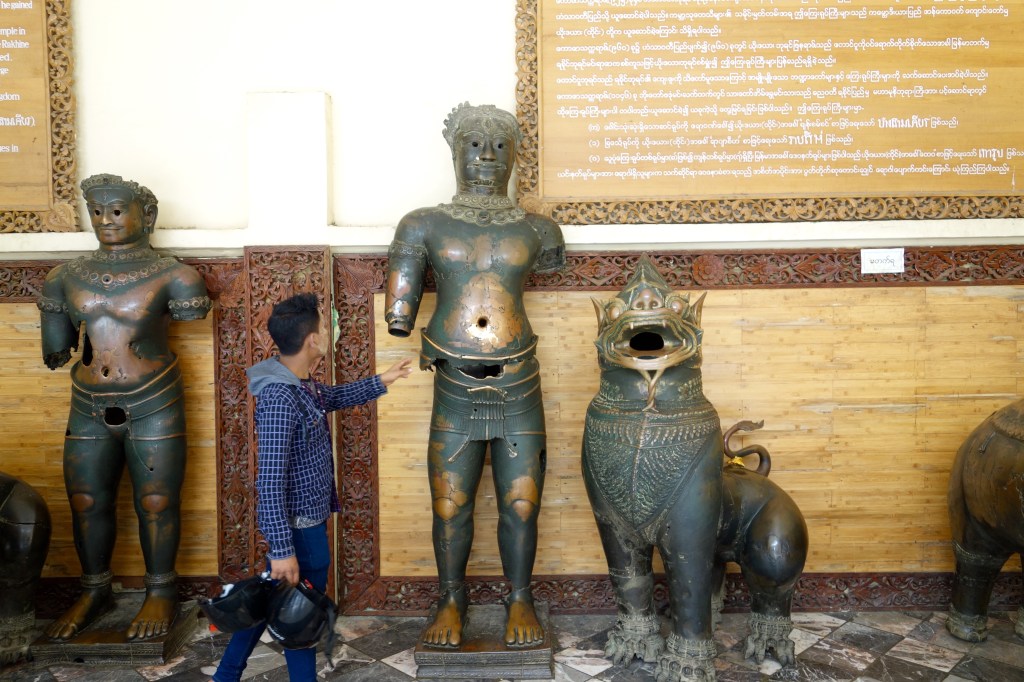
These tea shops were one of my favorite things about Myanmar. They are everywhere and represent a place you can just stop and take a break for awhile with some good company (and I imagine if you speak Burmese) conversation.As a sucker for ornate wooden buildings the Shwenandaw Monastery was my favorite place in Mandalay. It was actually originally part of the Royal Palace but was reconfigured into a monastery by Mindon’s son because he thought it was haunted by his dad. It is the only surviving material from the original palace.The nicely lacquered undercarriage of the building.The interior did not disappoint. The carvings were incredibly ornate in original Burmese style, and the contrast between gold and the lustrous, dark teak wood was perfect.Rumor has it that Burmese consume more onions per capita than anyone else in the world.A typical produce market. These went on for blocks and blocks. It redefined for me how good fruit can actually be.Apparently rubbing the belly really is good luck! Probably one of the only places you can casually touch artifacts over a millennium old. Also, check out the Burmese script on the sign. I’m convinced it is the coolest and all around most satisfying to look at of any in the world.Mandalay is still the jade capital of the world, and here is where they turn an average looking rock into the softly glowing gemstones we imagine. Inside the main complex of offices men were smoking, drinking, playing pool and looking generally furtive looking as they conducted business.If you couldn’t tell by now, Burmese like to cover just about everything in gold leaf. Here is a traditional workshop where the leaf is pounded with a hammer and then placed on things. I purchased a package of leaf and went to…The Mahamuni Pagoda, the official center of the gold leaf universe.Ancient tradition refers to only five likenesses of Buddha made during his lifetime. Two are in India, two in paradise, and one is the Mahamuni image above. According to legend, it was made in the city of Arakan when the Buddha visited in 554 BC. Male devotees have been placing gold leaf on the body for hundreds of years and now it is feet thick in places. The countenance is polished early every morning.I was ambushed by this novice at the base of Mandalay Hill who accompanied me all the way up in order to practice English. The hill is covered by a crazy network of passages, shrines and stairways, and I was grateful for his guidance! Most novices do not necessarily have an intention to become monks, but rather it provides an opportunity for a roof overhead, food, and most importantly: education.
There is something about the looks of your young Buddha buddy that I really like. A sharp looking young man. The function of their monasteries is very similar to Western ones, or visa versa.



 potravels
There is something about the looks of your young Buddha buddy that I really like. A sharp looking young man. The function of their monasteries is very similar to Western ones, or visa versa.
LikeLike