I originally planned on taking the popular (and cheap) overnight sleeper train from Bangkok to Chiang Mai, but finally opted to take buses in order to stop at the historic cities of Ayutthaya and Sukhothai on the way.
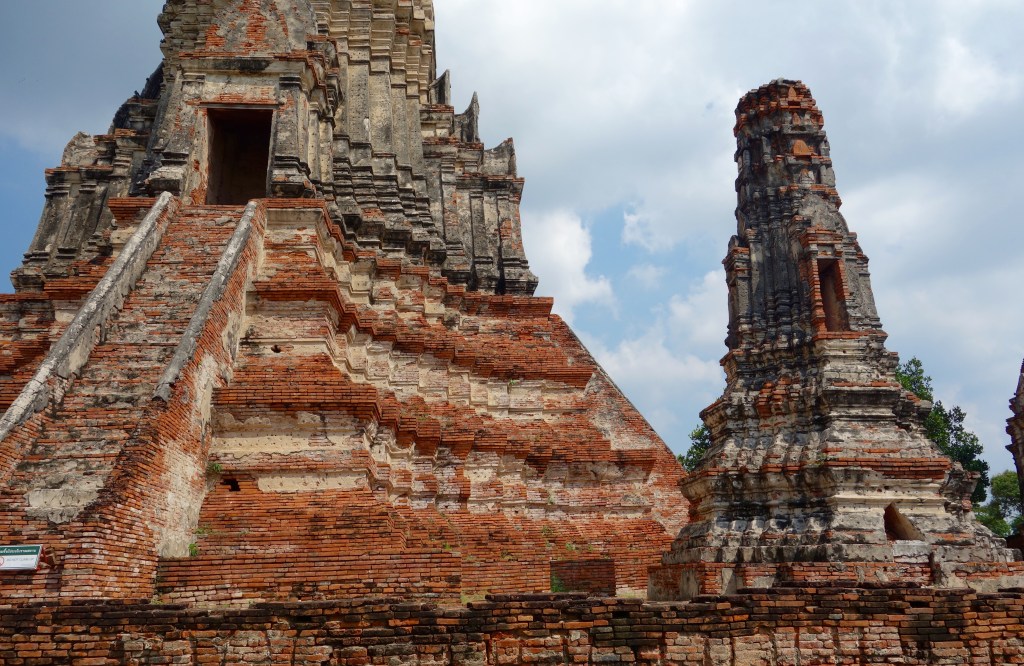
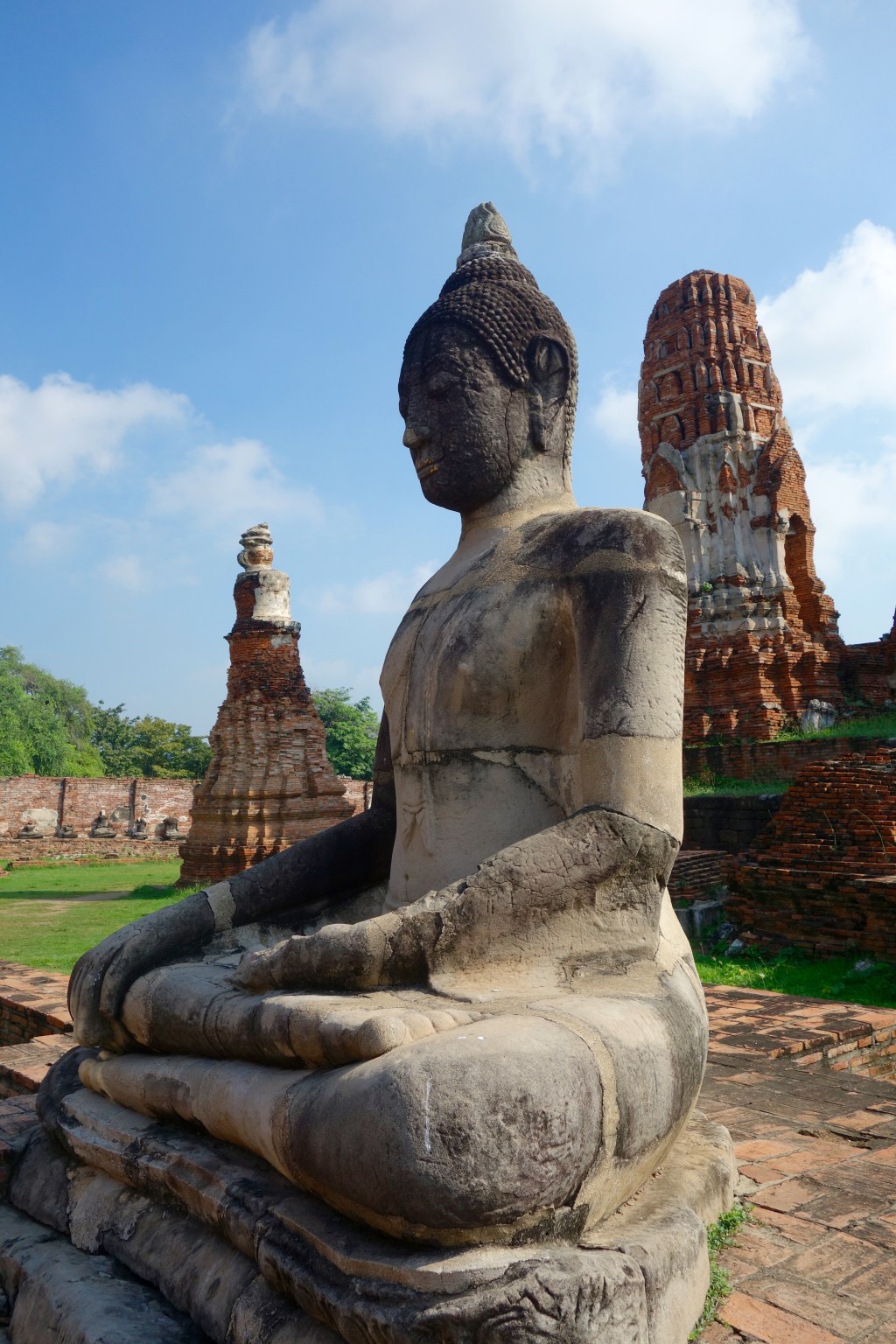
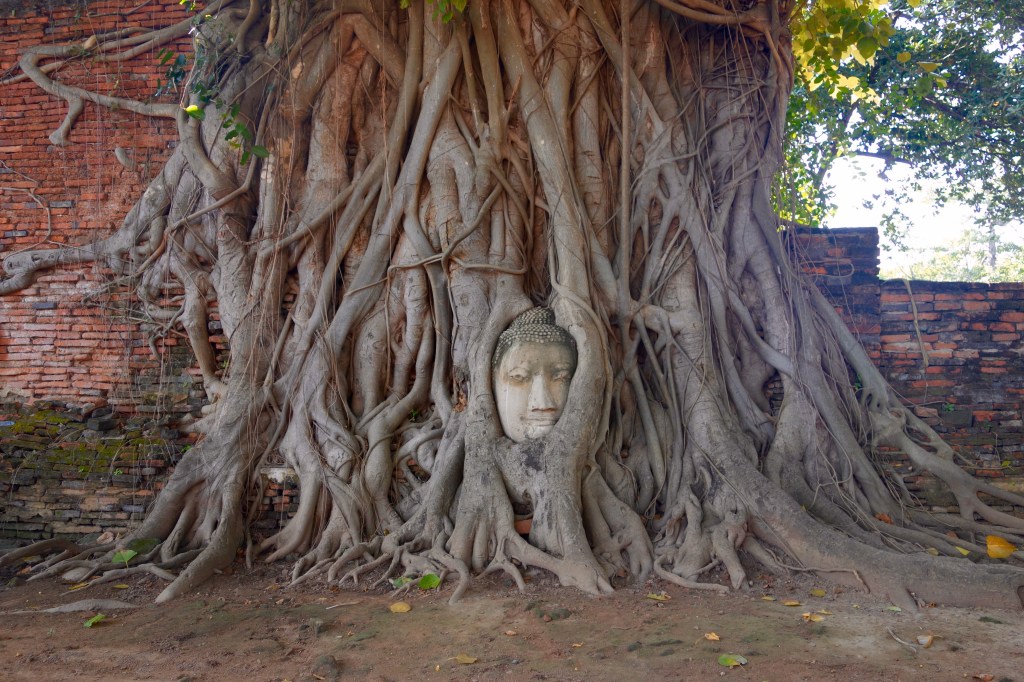
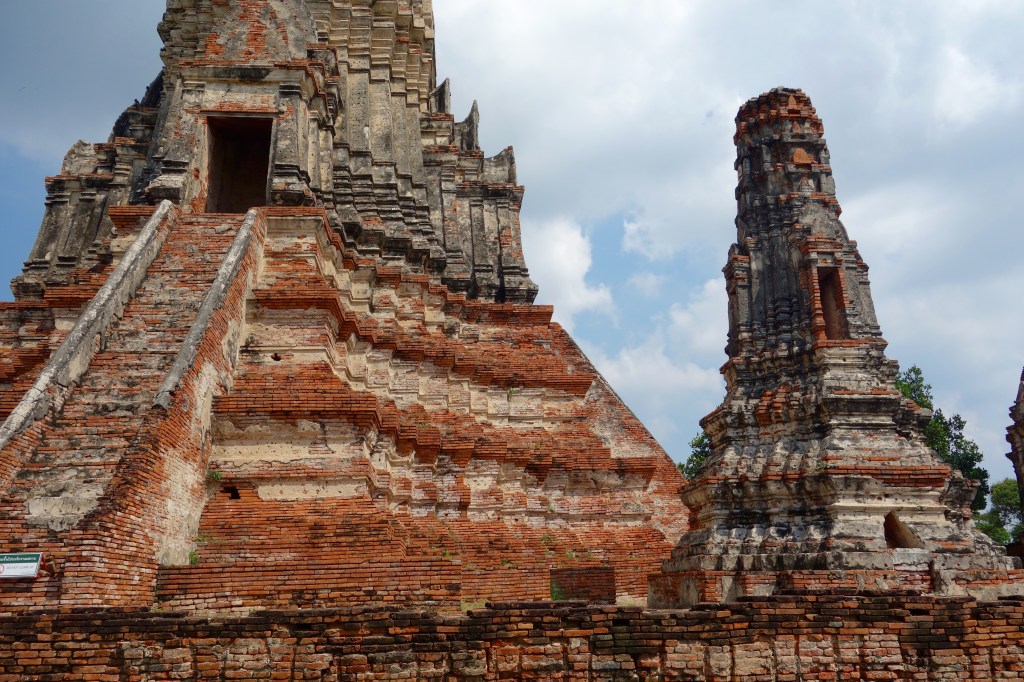
Ayutthaya was founded in 1350 and was the second capital of the Siam kingdom (after Sukhothai) until it was razed by the Burmese is 1767. So it goes… Until then it was a major, modern metropolitan hub of trading, art and engineering. It’s greatest strength was its location- it is essentially an island formed by three rivers, and at the time it was located on the shore of the Gulf of Thailand. The land to the south where Bangkok is built did not exist at the time, but is actually formed by sediment buildup from the Chao Phraya river! The city is well-documented by both European and Asian foreigners who expressed wonder and awe at its sheer magnitude and splendor. The people of Ayutthaya are also noted for their advanced feats of hydraulic engineering. They had a complete system of running water in the city, and a system of canals, retention ponds and dams for agricultural purposes. Foreign travelers from the time also noted the many ponds and man-made rivers that flowed through the city itself. It was reportedly basically a cluster of islands connected by bridges and viaducts. This being said…the state of the ruins today leaves much to the imagination.
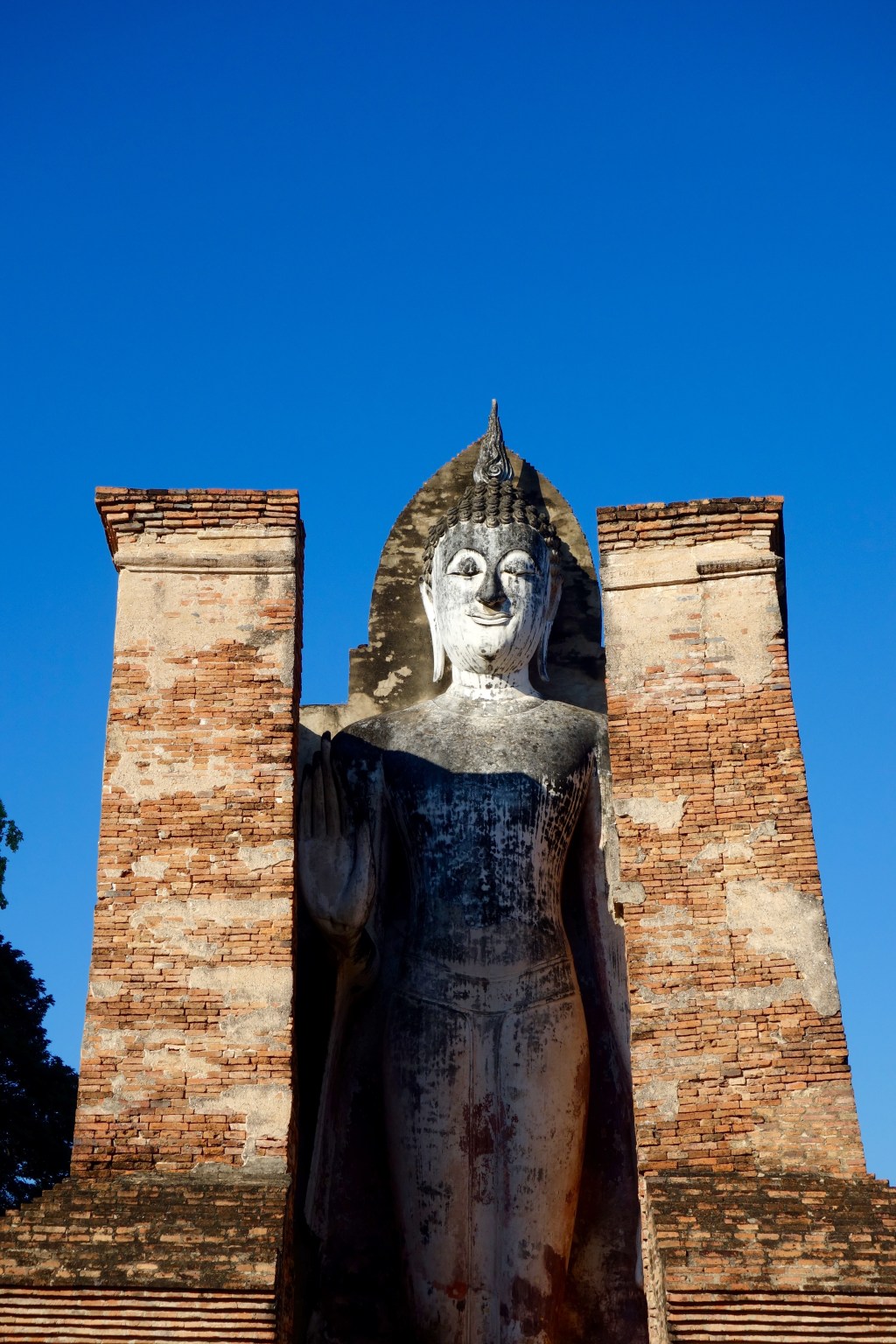
Sukhothai fits a very similar description, and was the predecessor of Ayutthaya from around the 12th century. The people of Sukhothai are credited with developing the style of architecture and art still emulated in Thailand today, and is referred to as the “Sukhothai style”.
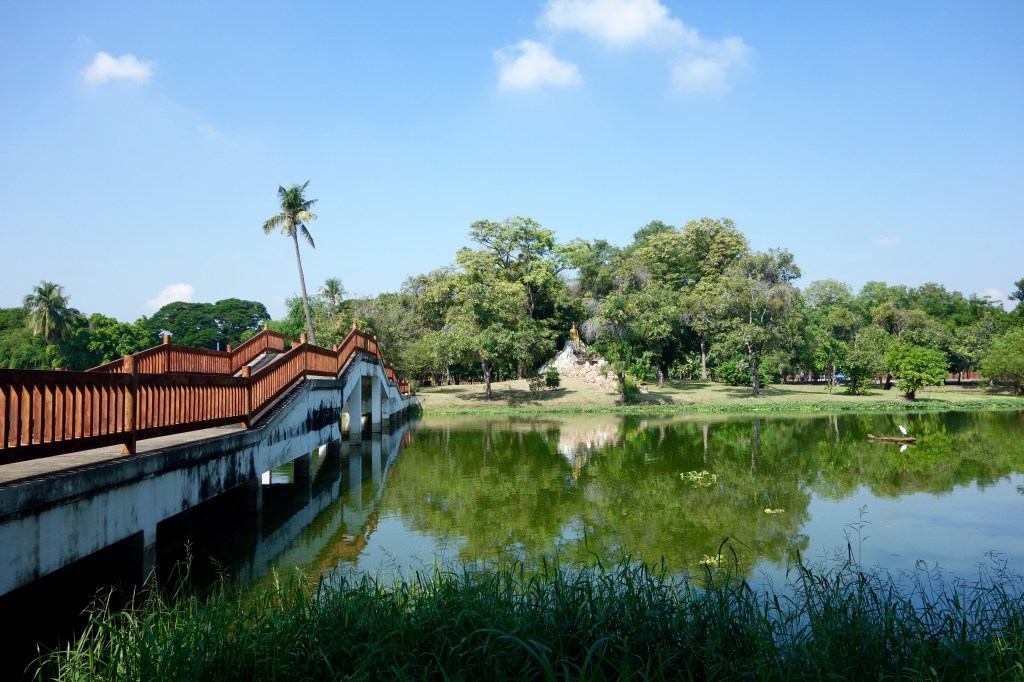
While the ruins of these two cities are, in fact, quite ruined they still retain much beauty, and I enjoyed a few days quietly bicycling around and soaking it all in.






 potravels
Love the elephants exiting the base of the pillar! You’re right, the ruins leave a tremendous amount of room for wonderment! I can only imagine the grandeur of the city in its day – awe inspiring!
LikeLike