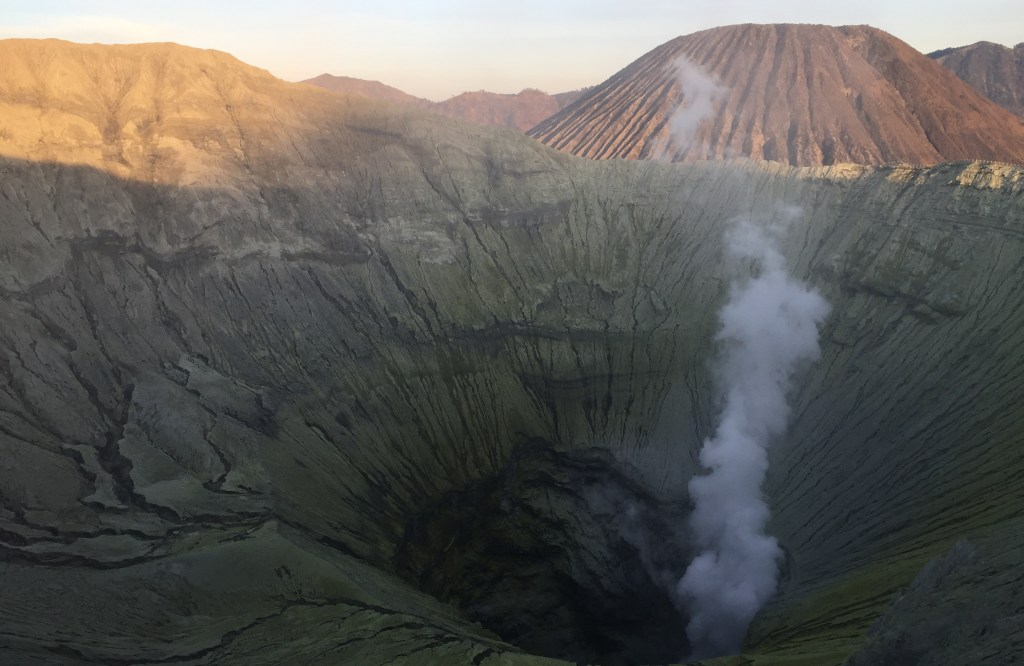
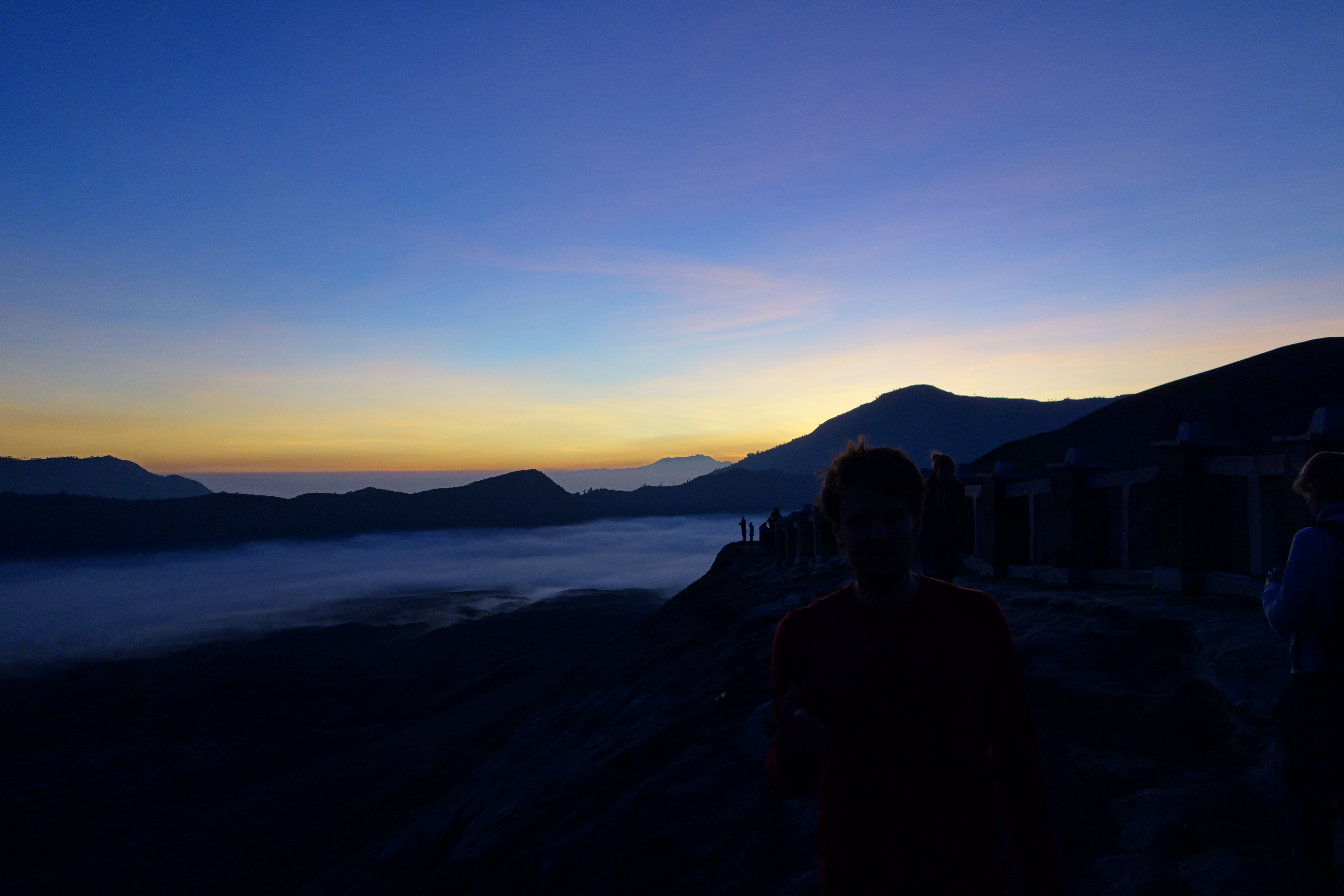
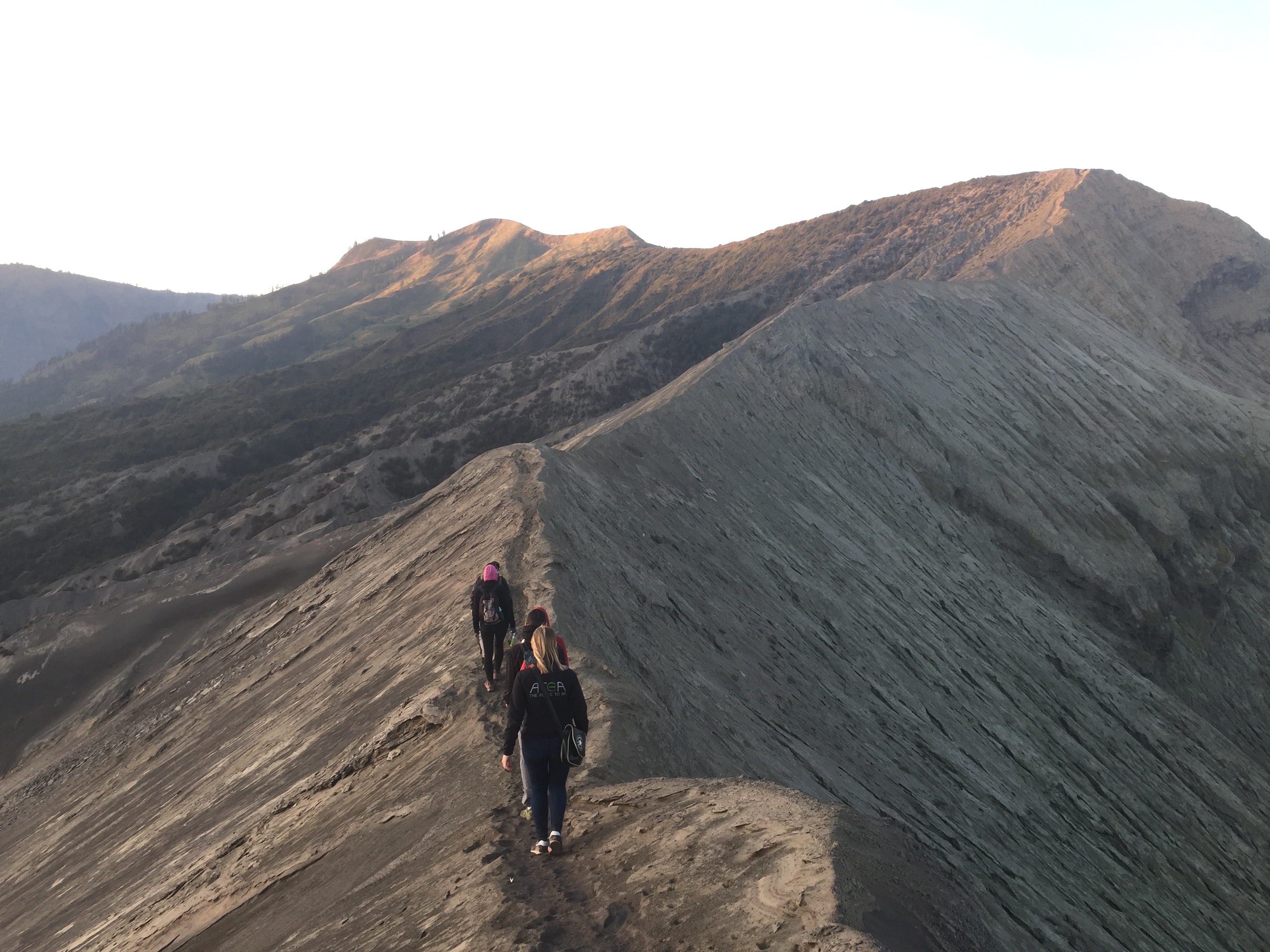
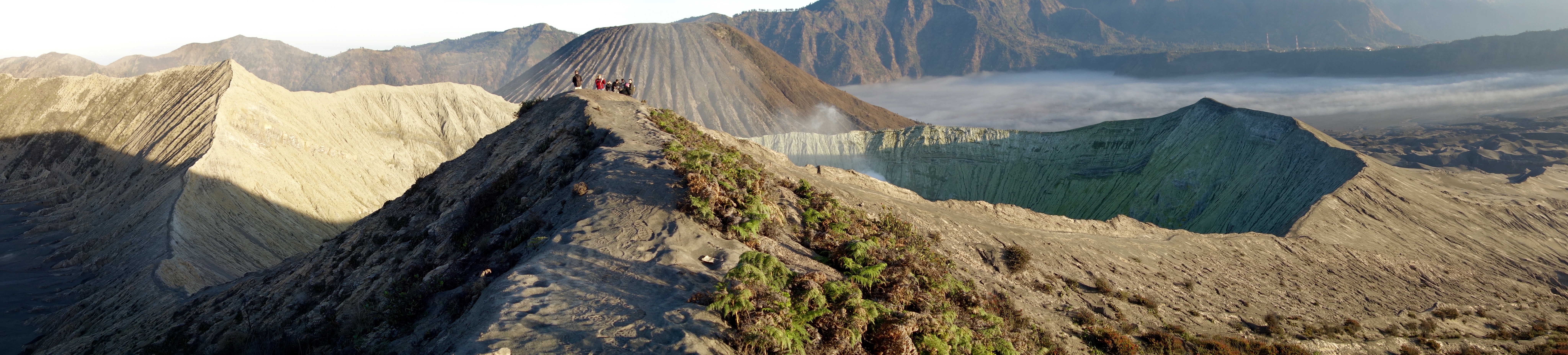
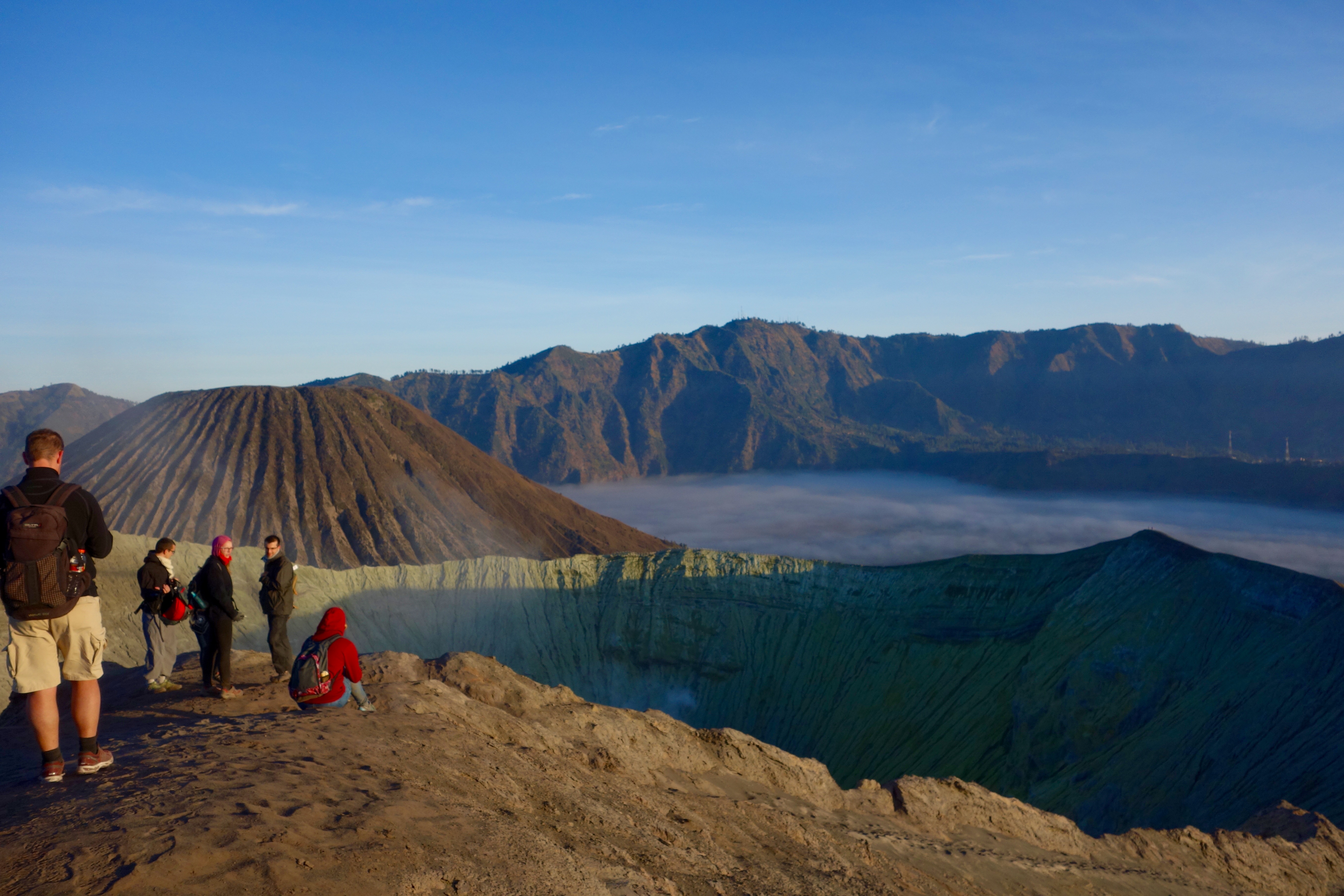
The final two stops in east Java were both sulfurous and spectacular, but I walked away from each with distinctly different emotions. Mount Bromo is the most active of a series of geologically new volcanoes that together form a lunar landscape. It is considered a sacred location based on a tradition started in the 15th century, and many locals toss bouquets, food, and other items into the crater as offerings to the mountain gods. There is also an annual ceremonial procession called Yadnya Kasada, and at the base of the mountain is a Hindu temple called Pura Luhur Poten (closed to the public). We woke up at 3AM in order to be at the crater rim for sunrise. Most visitors (a majority of whom are Indonesian, surpisingly) opt to take a Jeep ride to a distant mountain to capture the whole landscape, so we (myself and two German girls I met at Andrea Hotel) decided it would be nice to head straight to the relative solitude of the crater before everyone else showed up. We trekked about an hour across a sand flat and up the mountain through cool (almost cold) early morning fog accompanied only by a few locals on motorbikes trying to convince us that it would be much better if we hopped on their bikes to go to the distant viewpoint. Once there, we met with the French guys and hiked around the edge of the crater. It was alot farther than it looked, and near the end the sulphur gases were so strong it actually felt like a tingling mist on our skin.



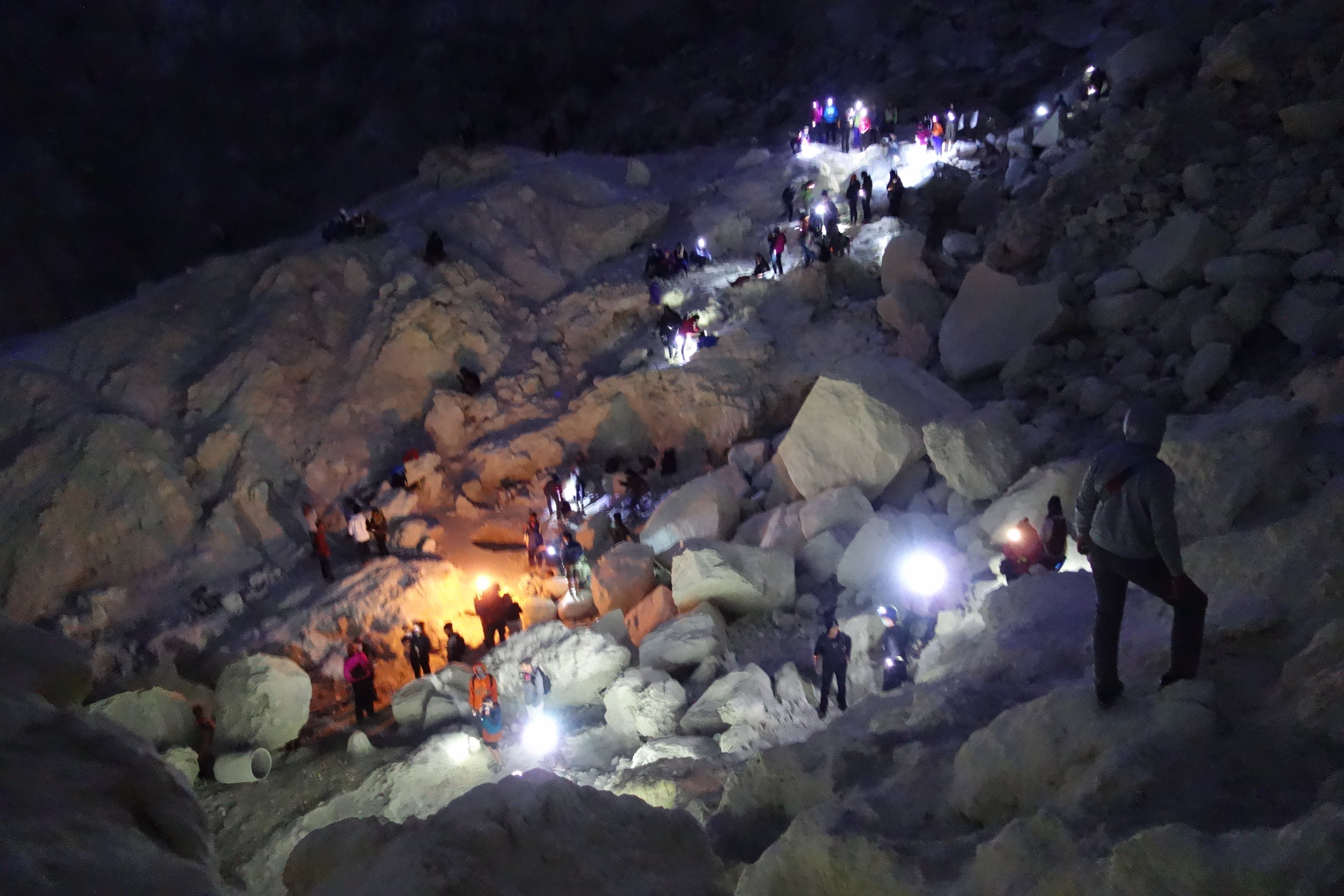
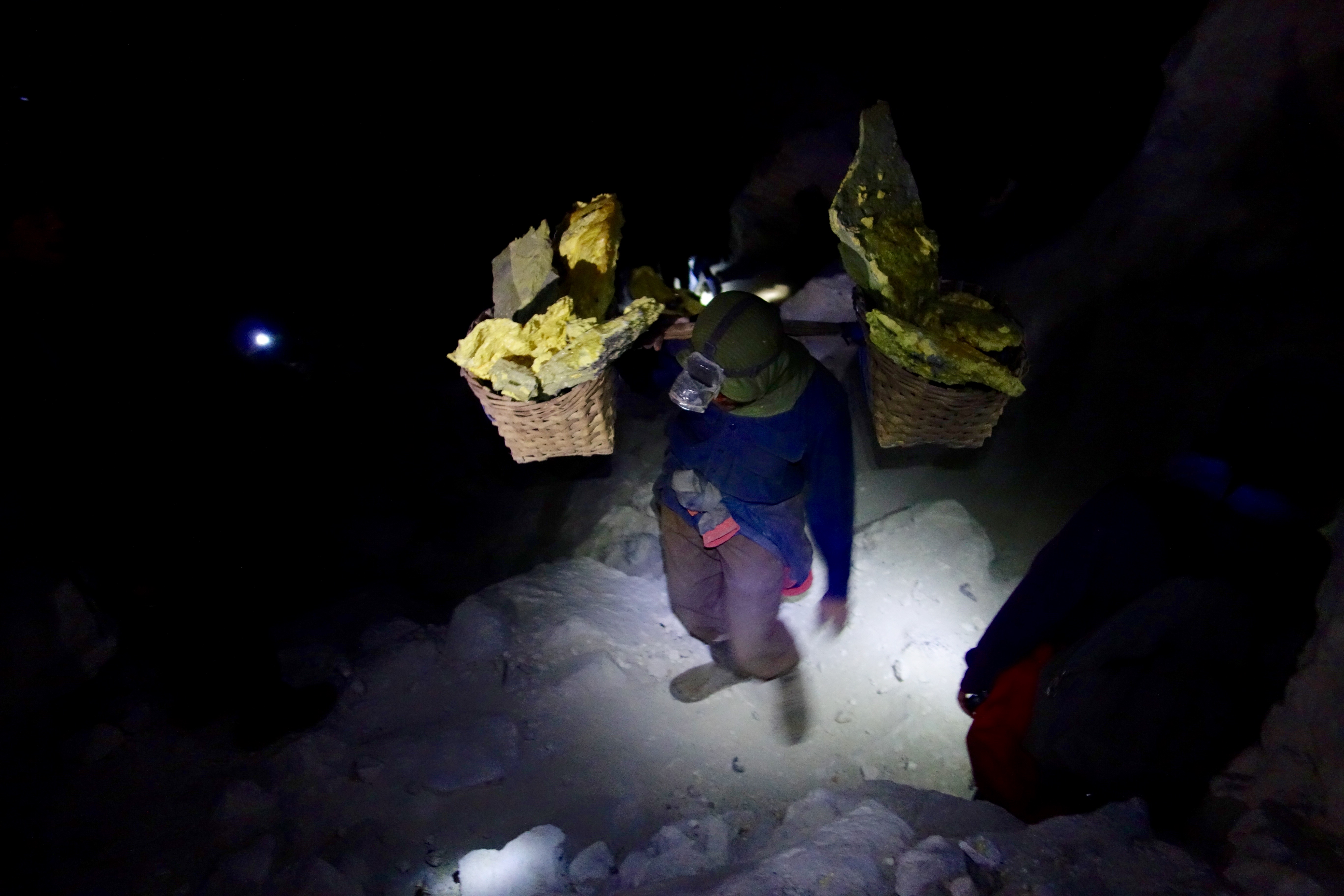
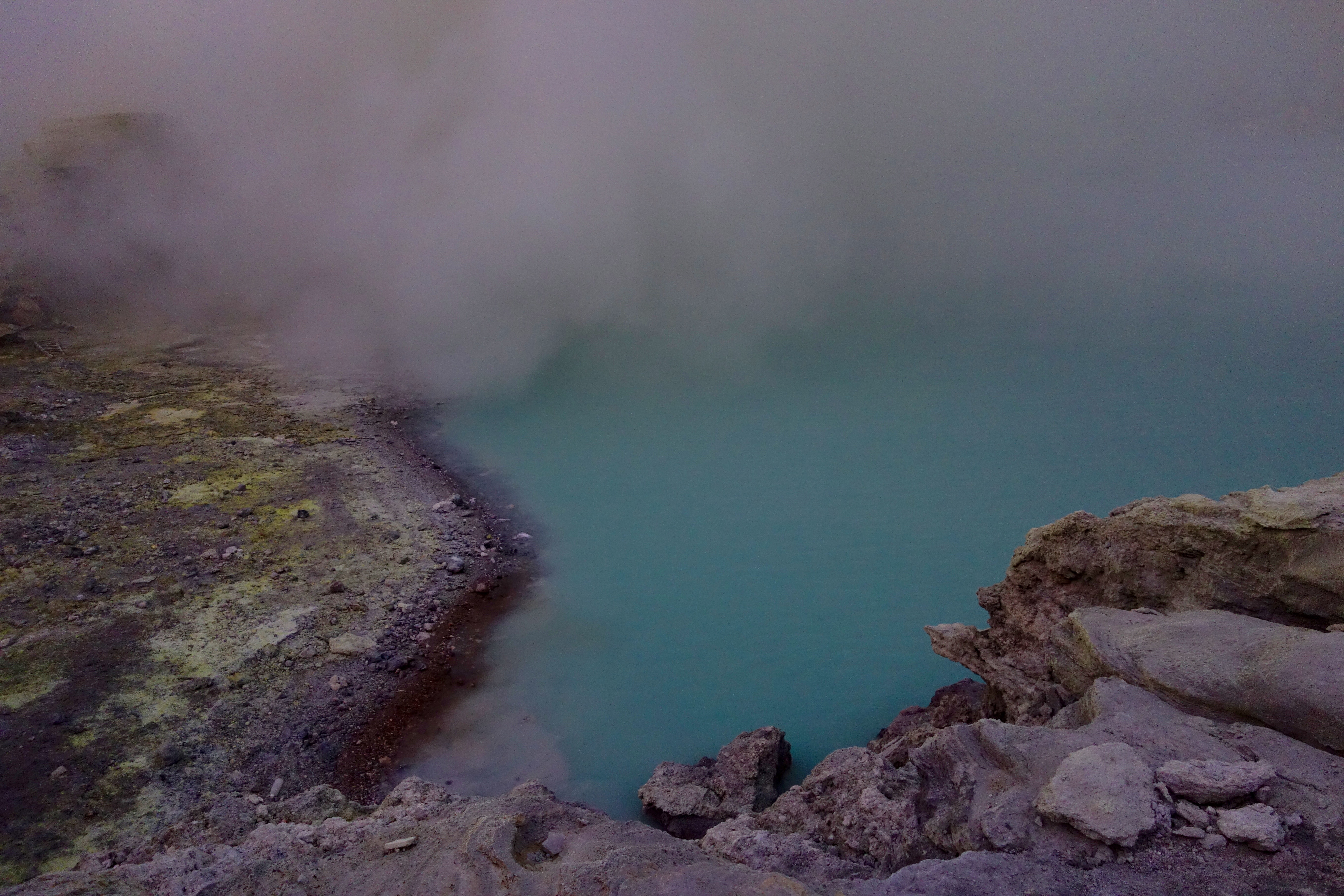
Ijen Plateau is significant for its rugged beauty, but also because there is a productive sulphur mine located there. Near the mine is an opaque blue lake. The excess gases released from the mine are lit on fire and when it is dark enough out the flame burns bright blue. So, we woke up at 1AM and made a grueling two hour hike with hundreds of other visitors (again, mostly Indonesians) to the mine. It was a sight, but it was a far cry from the early morning tranquility of Bromo. After the hike up the plateau, the hike down into the mine felt like a descent into hell. Suddenly a few of the local guides started shouting at everyone to clear the path, and we watched a miner slowly, painfully pick his way up the same path with a load of sulphur on his shoulders. The loads average 80 to 90 kilo, almost 200 pounds, and the laborers get paid 700 rupiah per kilo, or about 5 cents. The worst part was seeing them struggling up the path only to be blocked by tourists taking pictures of themselves or the landscape, oblivious to their existence. Instead of asking the tourists to move, they usually tried to find a way around them off the path.




 potravels
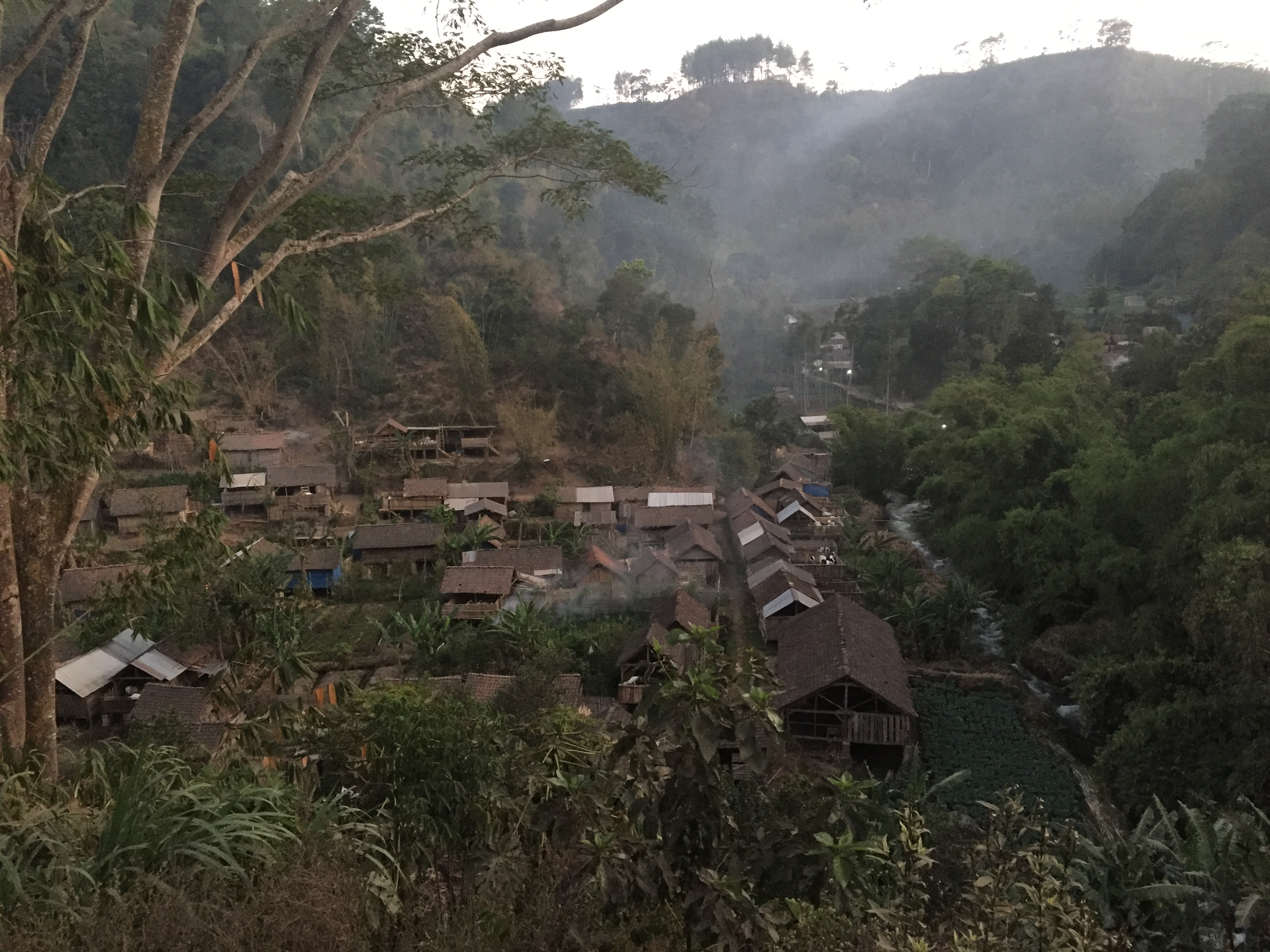
Dad and I recently saw a PBS show about the very same sulphur mines of Ijen Plateau. I remember thinking how desperate those men were to be able to provide for their families and how sad it made me feel. They die at a young age, all to make maybe 5 or 10 cents a day for, as you said, to provide the insatiable world with cosmetics and pharmaceuticals . If we could only see how our want of excess is derived from the want of others… As troubled as it made you feel (for which I’m glad) it was an important experience.
Looking down the throat of an active volcano is both irresponsible and wildly adventurous! Since the volcano did not erupt, I’ll lean toward wildly adventurous! : ) Very interesting post!
Stay safe! Love you lots!
XO
LikeLike
Hey Per,
Thrilled to view the photos and read your commentary on same. What an amazing
litany of journeys to embark upon. All God’s creations! Good that you finally connected with Bill Balam/Senior Beacon. The fact that they publish the
Senior Beacon Newspaper monthly could end up being a monthly article that the readership will look forward with much anticipation to read and live your experiences vicariously. It’s a ‘gamer changer’ Per! You Rock Po!
Love you,
Pepere and Memere
LikeLike
No wonder the locals took to worshiping the volcano. How could you not respect the power contained that in area? That landscape looks positively alien. Fascinating stuff about that mine. I wonder if the flaming of gases is intentional or alighted mistakenly and simply impossible to put out. Got a little mad hearing about those selfish tourists making life more difficult for the miners. That area isn’t a movie prop, it’s someone’s home and that lack of respect is shameful.
Feeling grateful for safe work practices in the US. Constant safety meetings can be aggravating but nearly all of us can work without fear of inhaling poisonous gas, being crushed by cave-ins, crushed under too-heavy loads, or exposed to invisible flames.
That said, did you get the feeling that the workers were overall unhappy with their lives? I’m curious because while its back-breaking labor, the wages they earn could potentially mean the difference between a house and a family or living dejected in the streets. Their work environment standards can and should be improved, and it’s possible the presence of that industry could be doing good things for the locals.
LikeLike