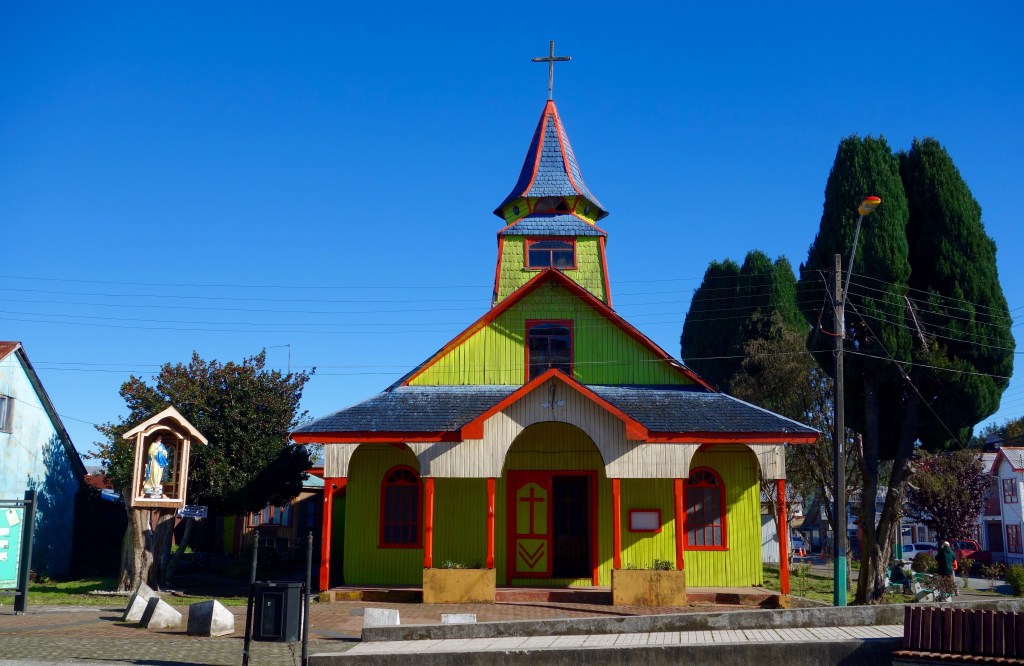
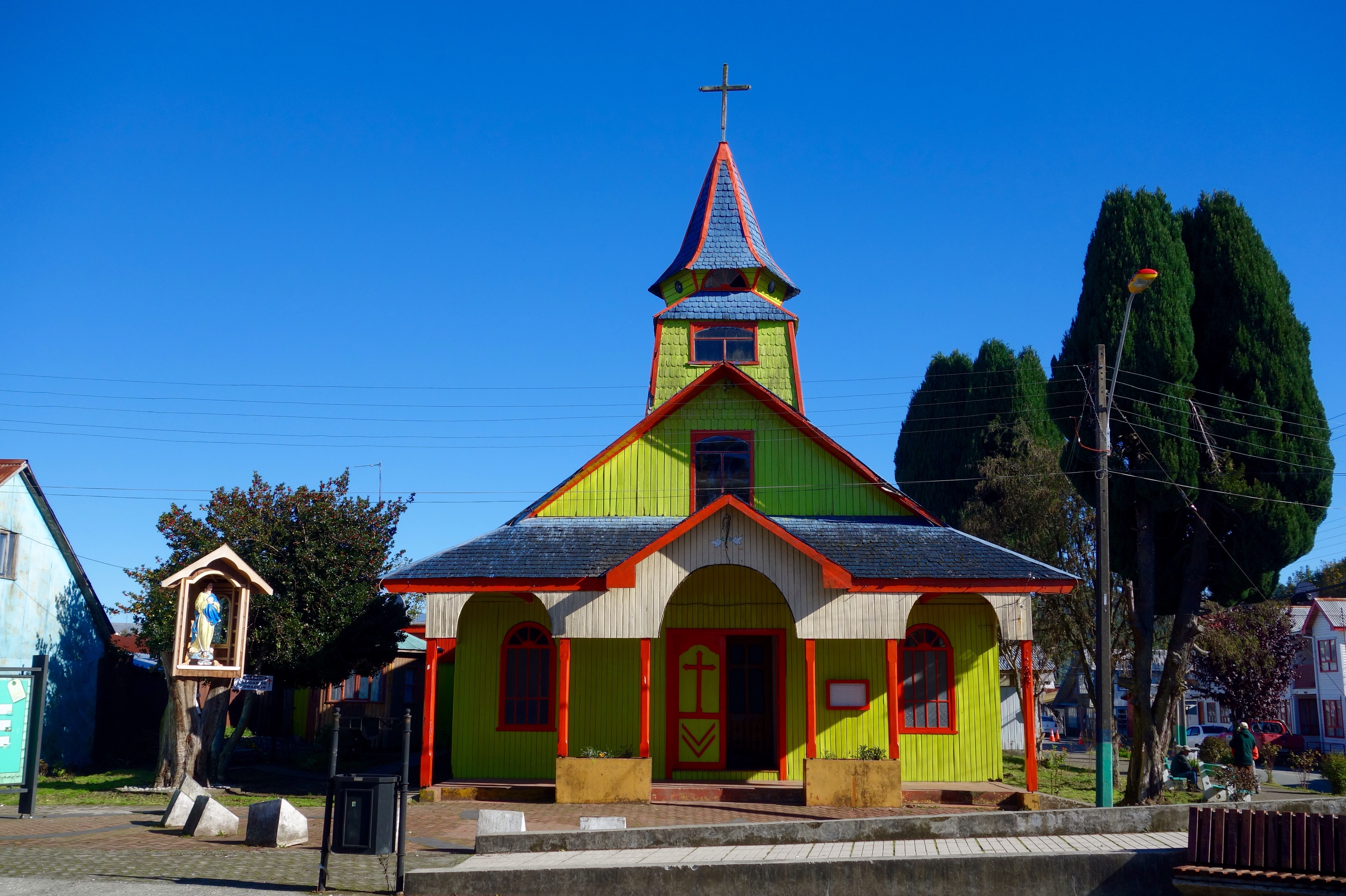
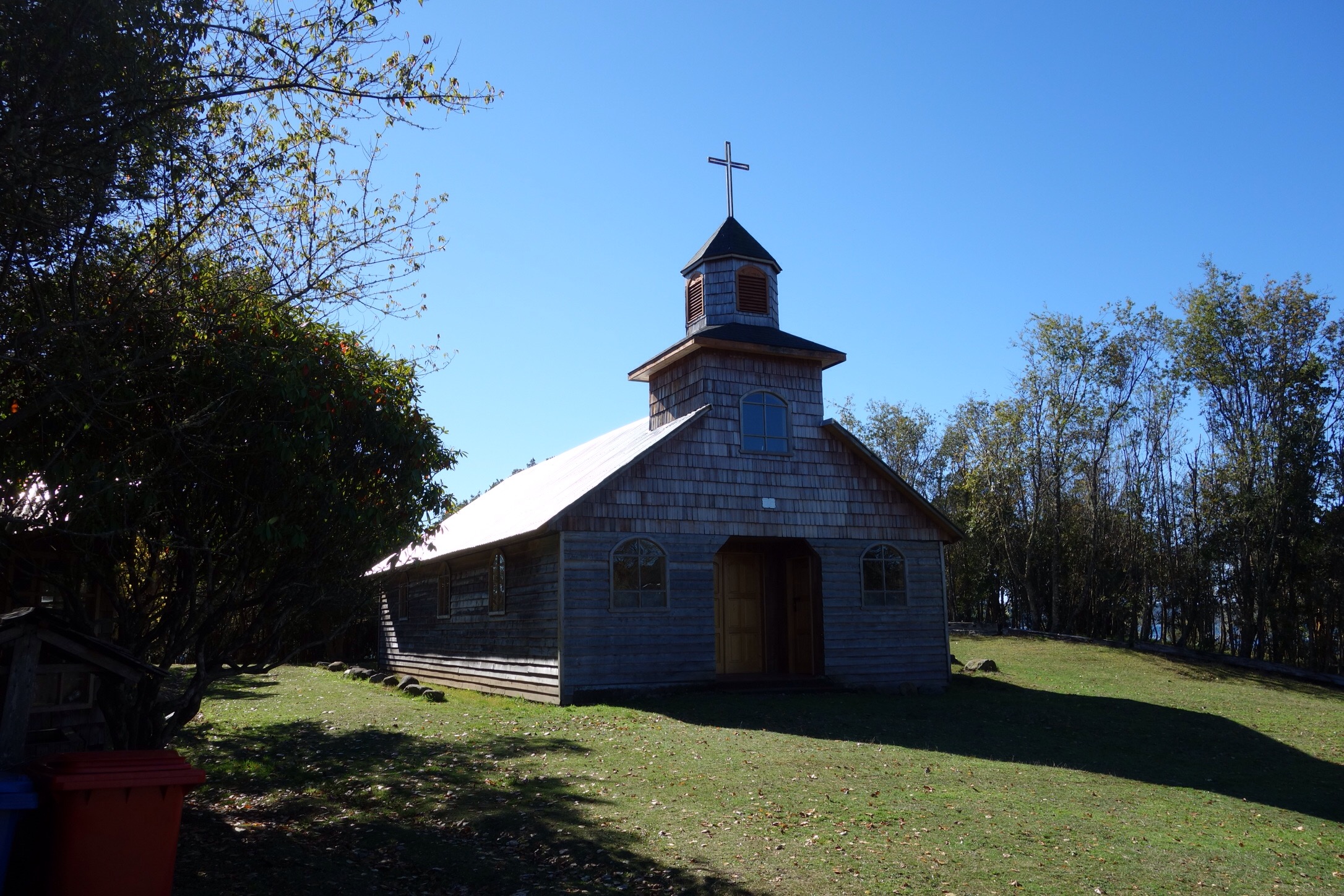
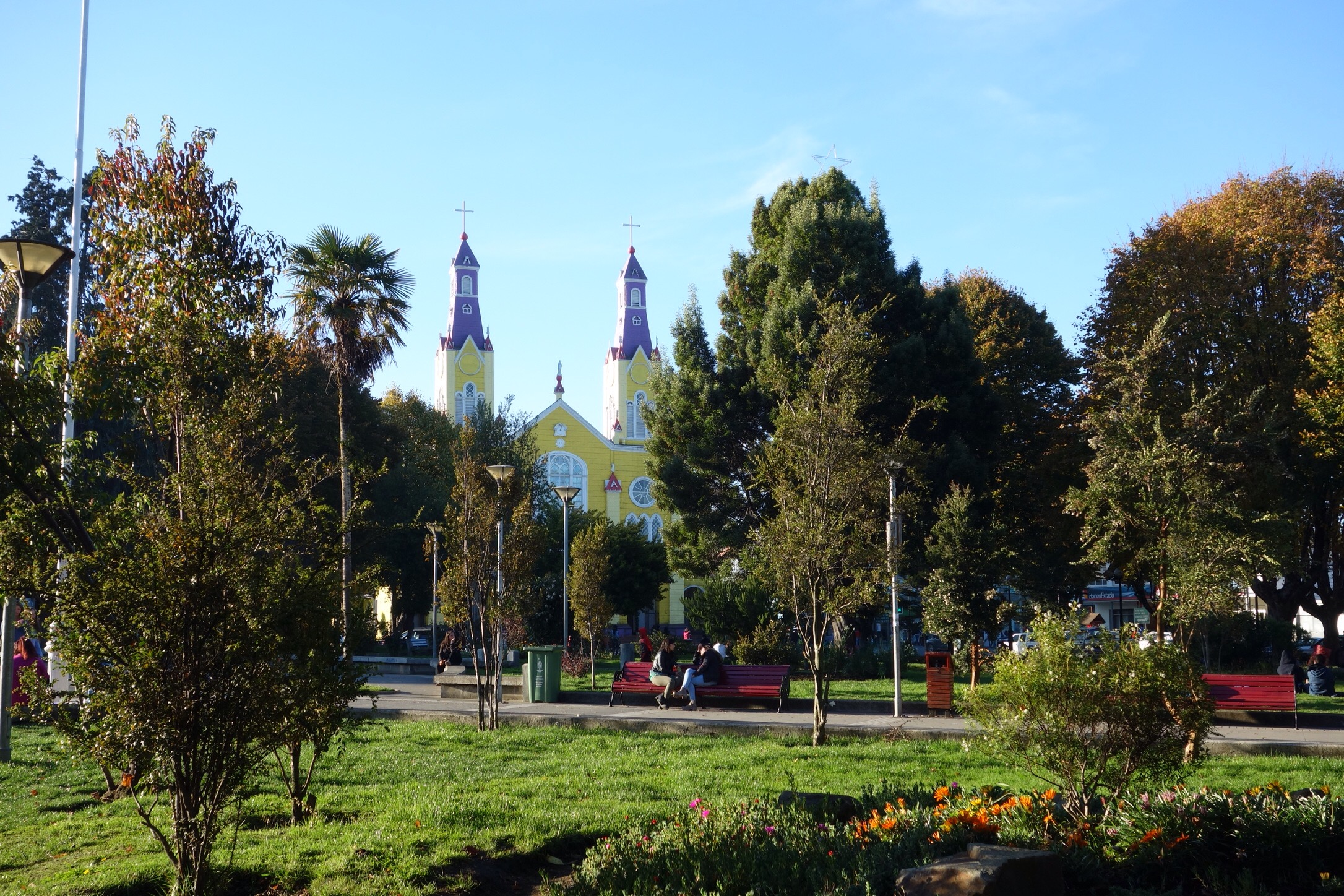
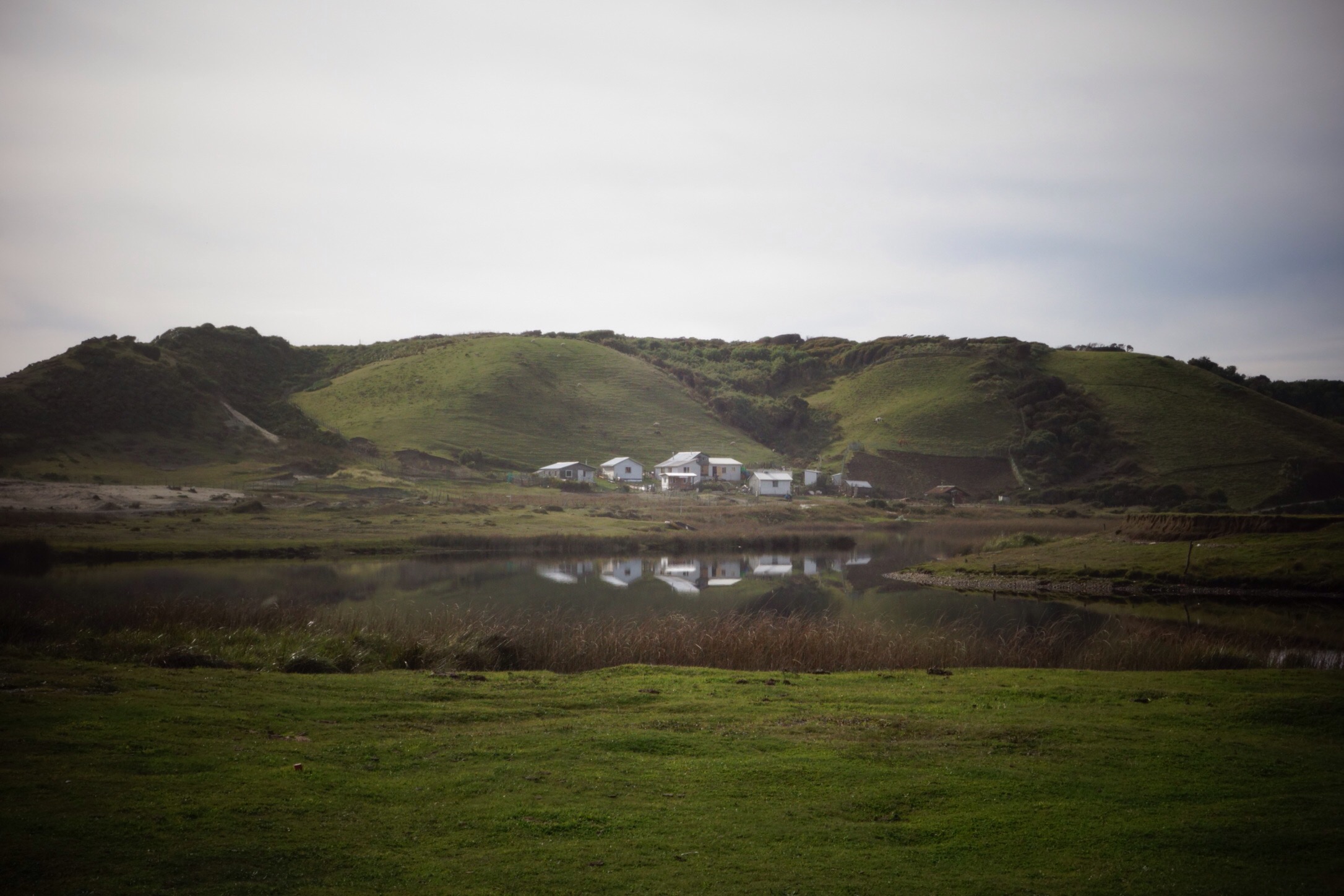
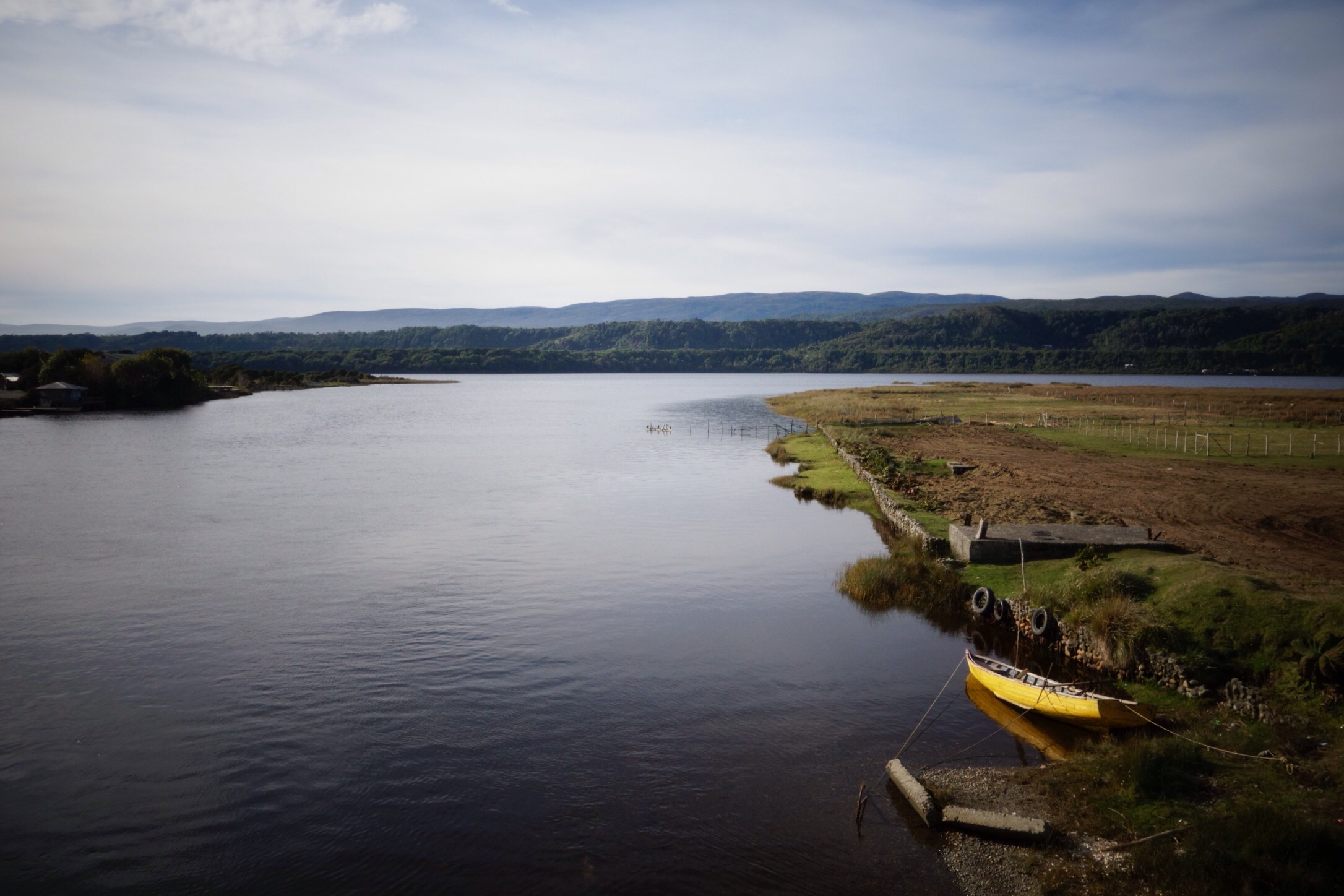
On the eastern coast of the island along the lower quarter of the top half (I’ll wait a moment…ok) are a number of fishing villages known for their friendly (if rough around the edges) inhabitants, unique churches and shellfish dishes. Joined by two girls I met at my hostel in Ancud I took a bus to the top of the main stretch and spent the day walking along the coastal beaches, over forested hills and through small plots of grassy farmland full of sheep and packs of guard dogs whose bark was hard to take seriously when they flopped over after a few seconds of ear scratching. It was a beautiful, relaxing day, but when it came to hitching a ride back to the bus station (about 15km away) at dusk we became well-aware of the incredible lack of cars driving on the road. Finally, just as the sun slipped over the hill we were picked up by someone who happened to be going exactly where we needed to go. We caught the last bus back to Ancud and the day remained a great one. It’s funny how these this always seem to work out.
On my third day I moved camp to Castro, which is the capital city of Chiloé and a convenient base for exploring the National Park of Chiloé located about 50 minutes across the island. I spent the following morning hiking around on the various forest, wetland and coastal dune trails before renting a bike and making the trip to the Muelle de las Almas. After exploring the pristine ecosystems of the island it is not hard to imagine where the locals enduring animist beliefs stem from…




 potravels