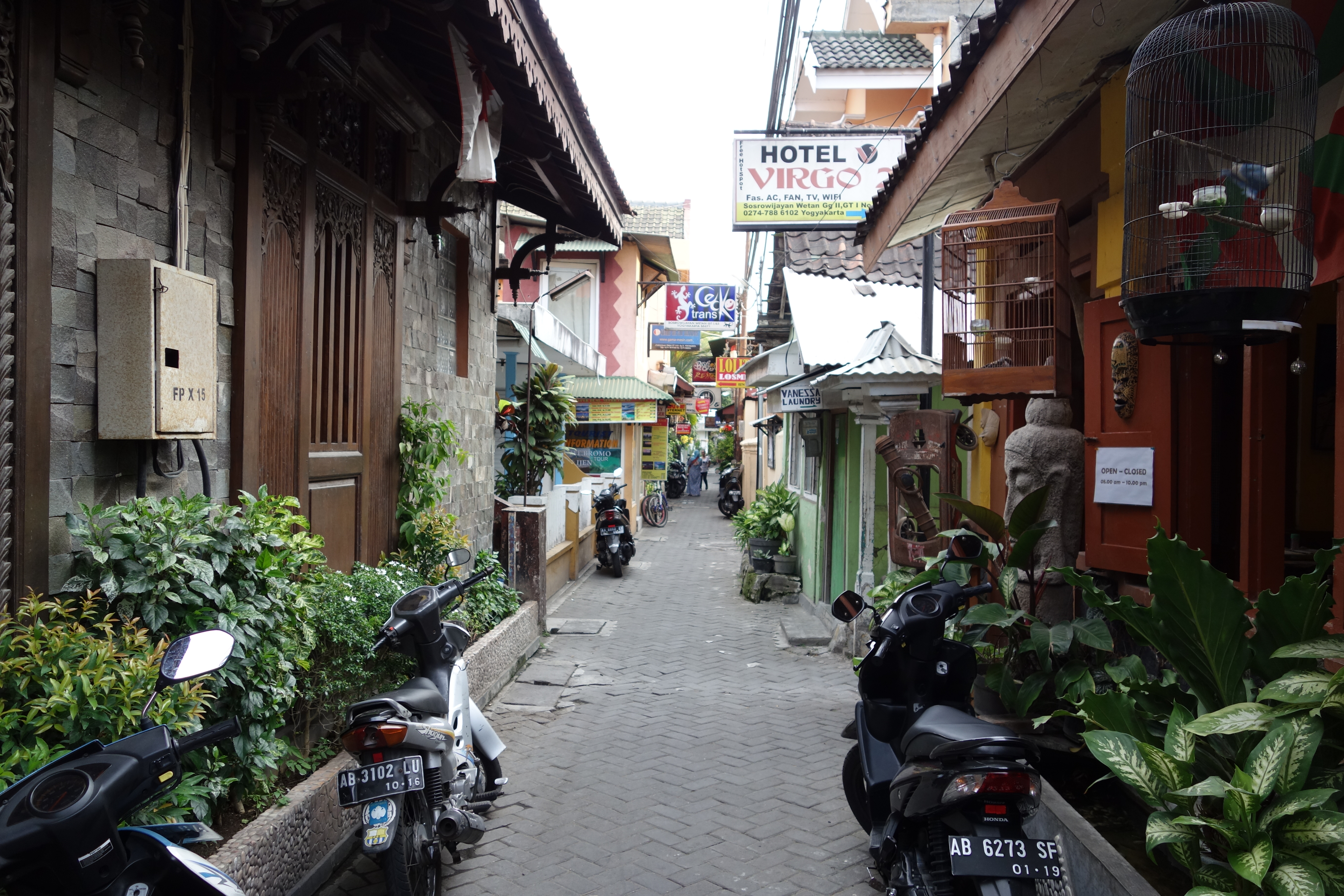
After my train riding epoch I arrived in the city of Yogya, the center of education and cheap food in Java. It is also the main stopping point for two of the most important temples in Java and as such is slightly touristy. I stayed in a hostel called Andrea Hotel, run by a Swiss guy and his Indonesian wife. It was located in the cleanest, most inviting alley (gang) that I have ever seen. While checking in, I was lucky enough to meet three French guys who became my friends and traveling companions for the next week or so. The next day we visited the temple complexes of Borobudur and Prambanan.
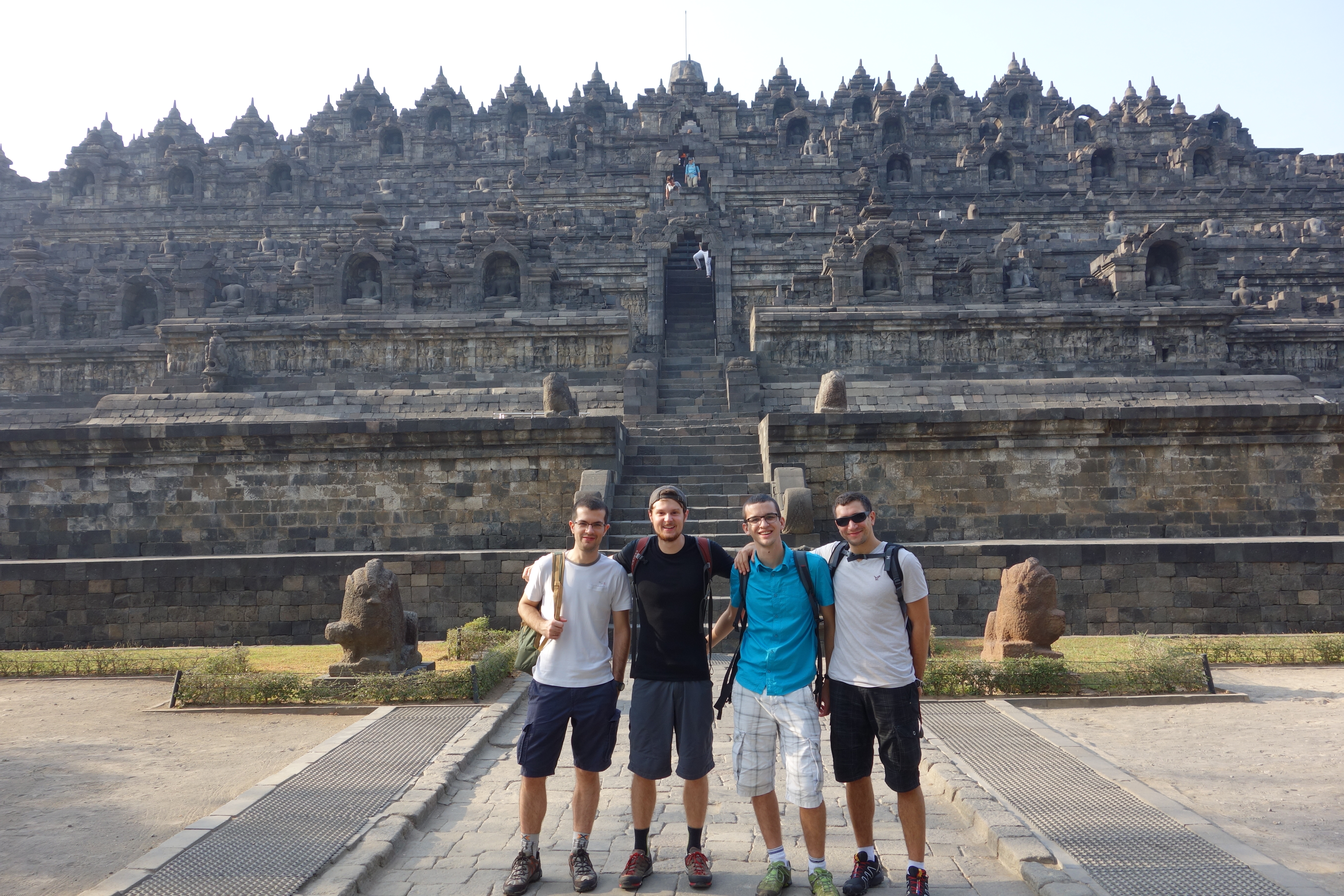
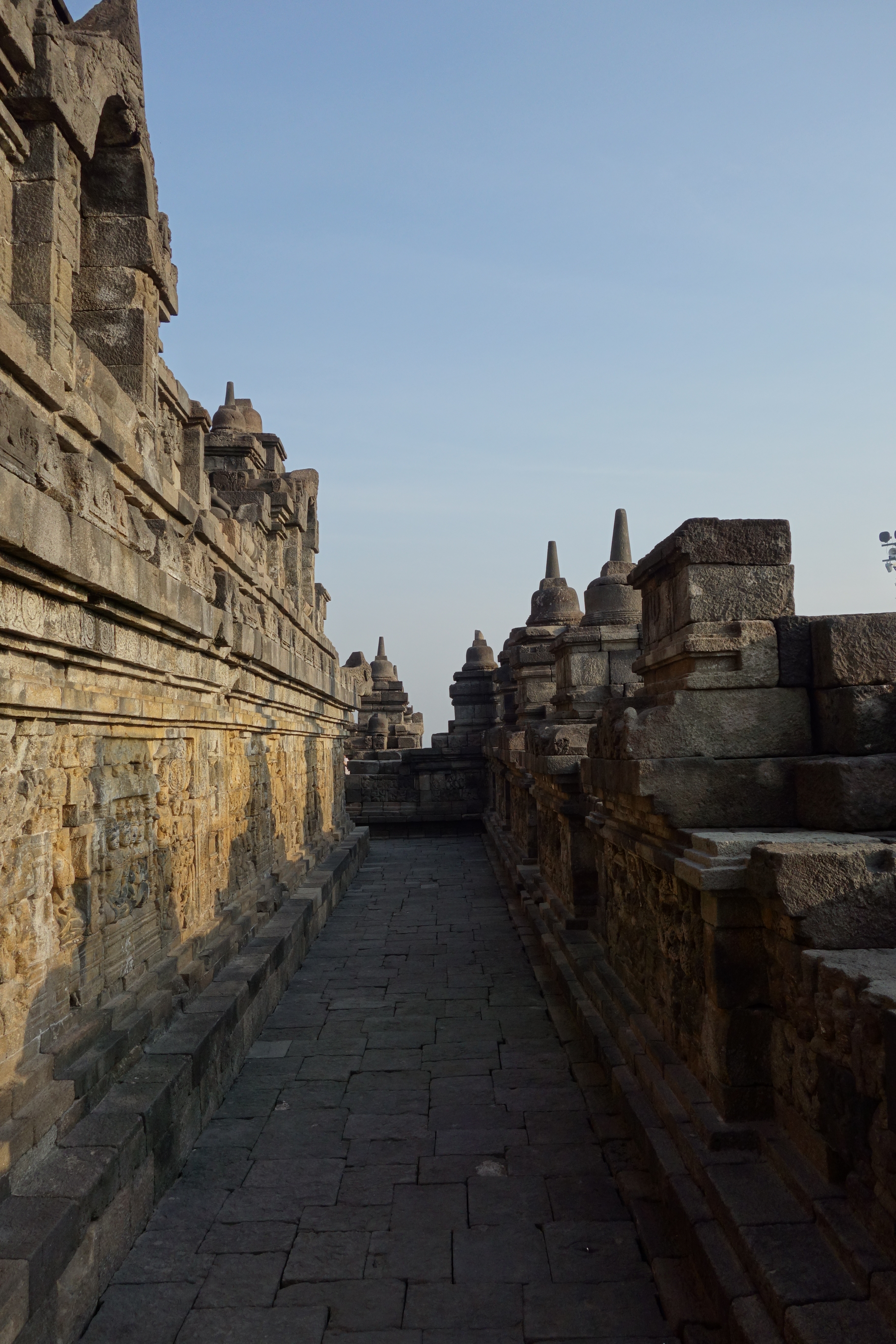
My new friends and I at the base of Borobudur. Built in the 9th century, it is still the largest Buddhist temple in the world and is still used as an annual pilgramage site. It is literally build around a hill, and the path to the top ascends through three levels symbolic of Buddhist cosmology: Kamadhatu (the world of desire), Rupadhatu (the world of forms) and Arupadhatu (the world of formlessness).Some of the 1,460 intricately carved narrative relief panels that extend around the circumference of each terrace. They depict scenes ranging from daily life in ancient Java to important symbols and subjects of Buddhist beliefs. Some areas were discovered with colorful paint residue indicating that the now gray stone was once decorated with many different hues.
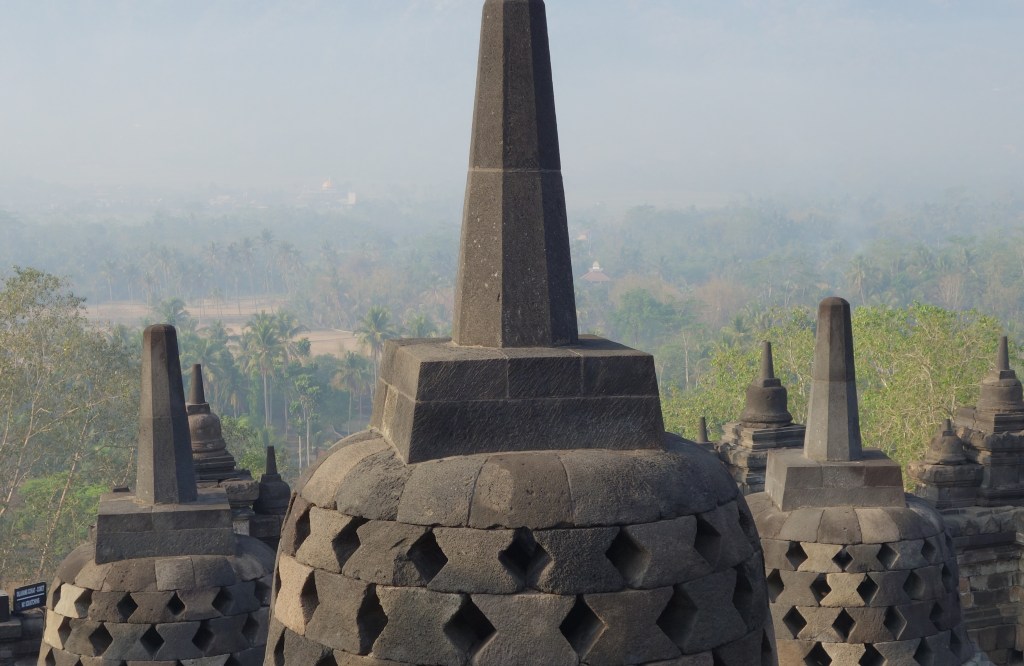
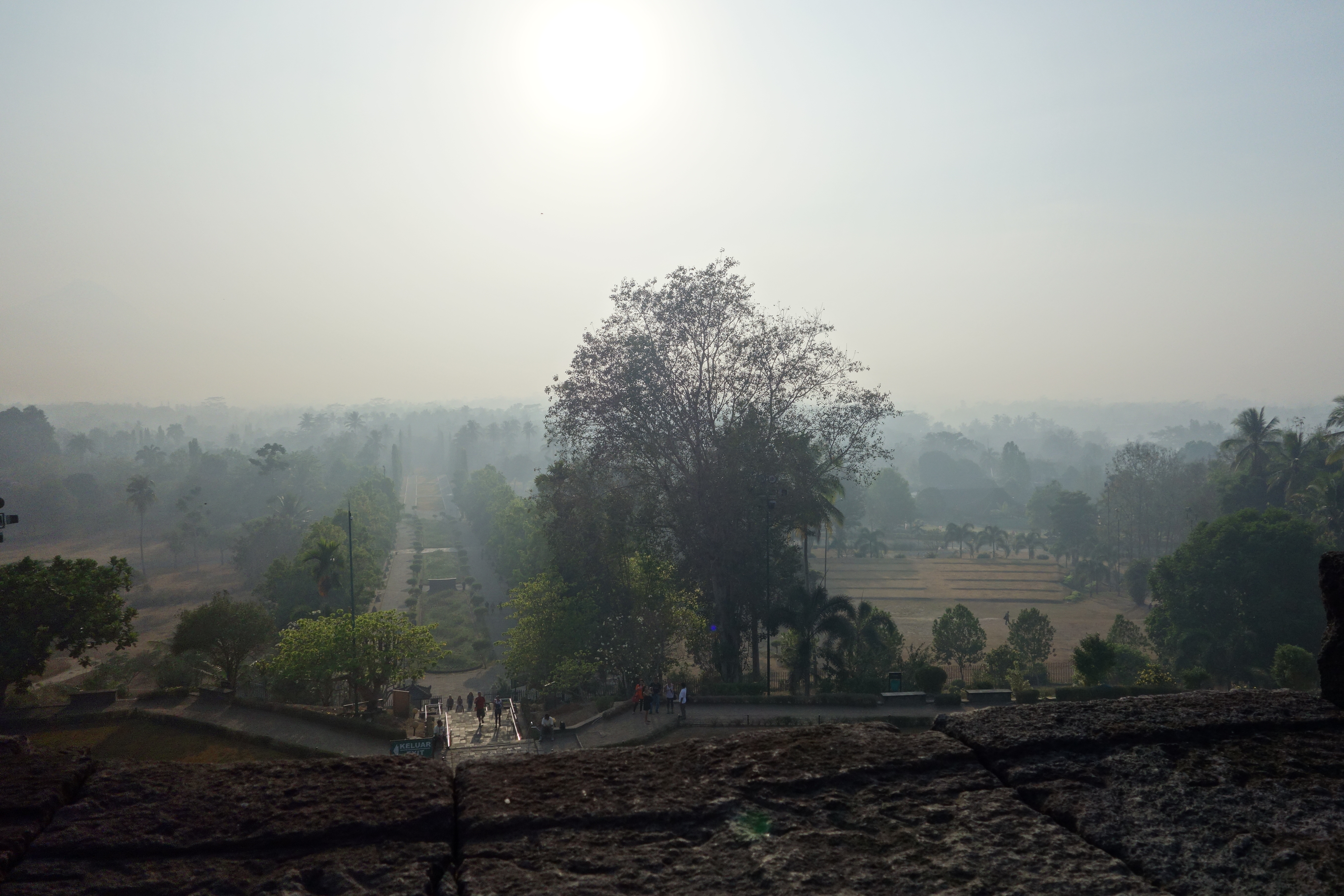
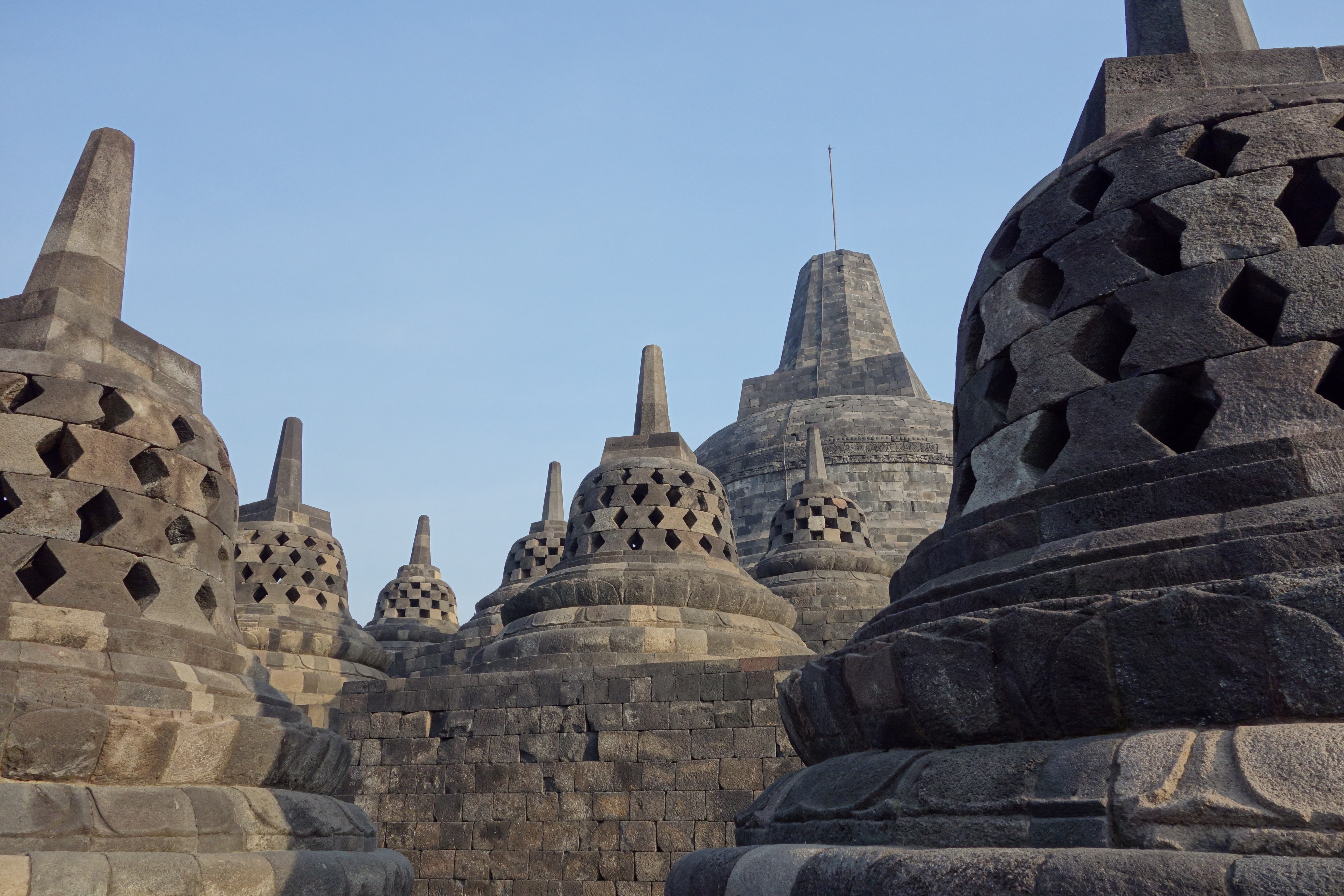
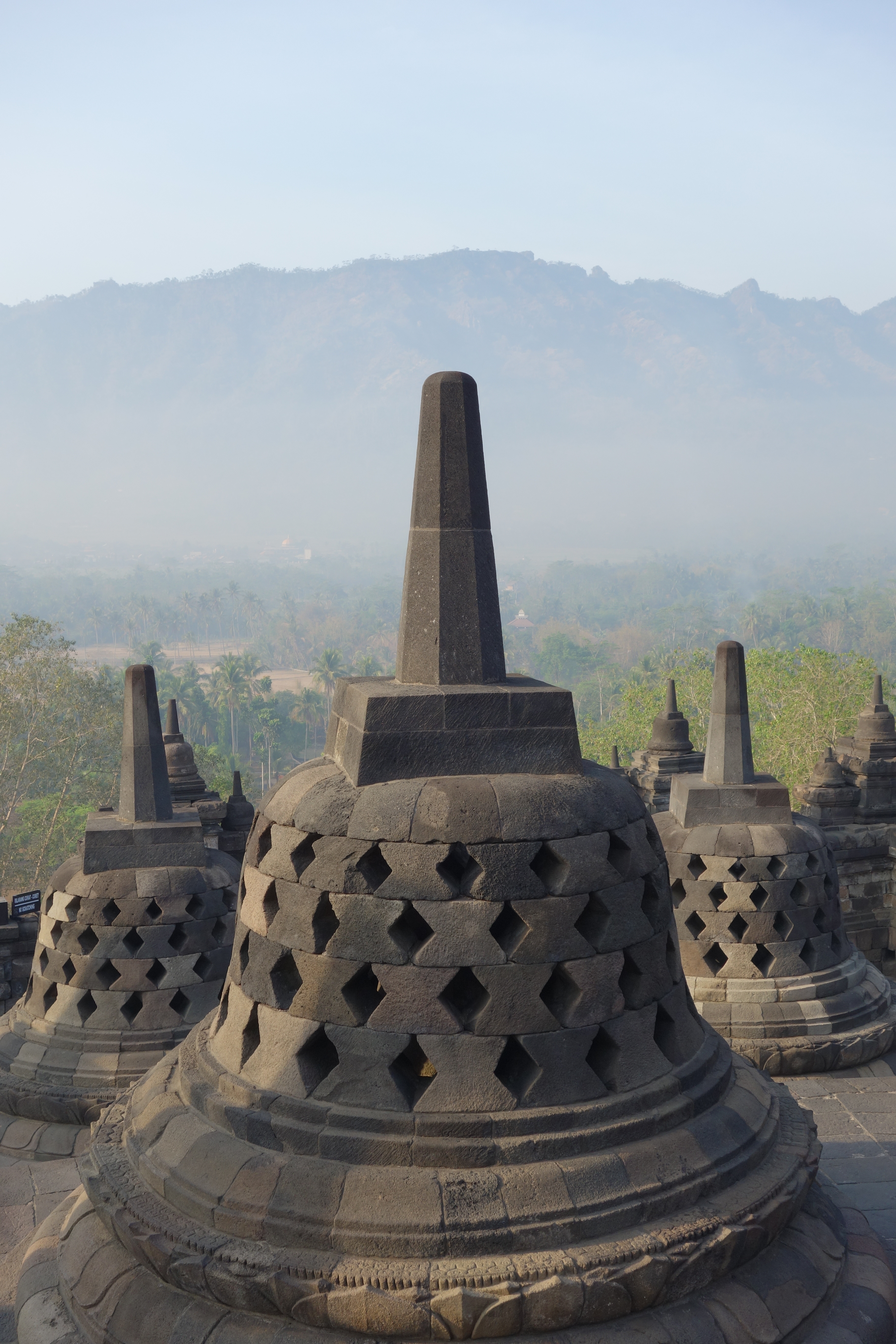
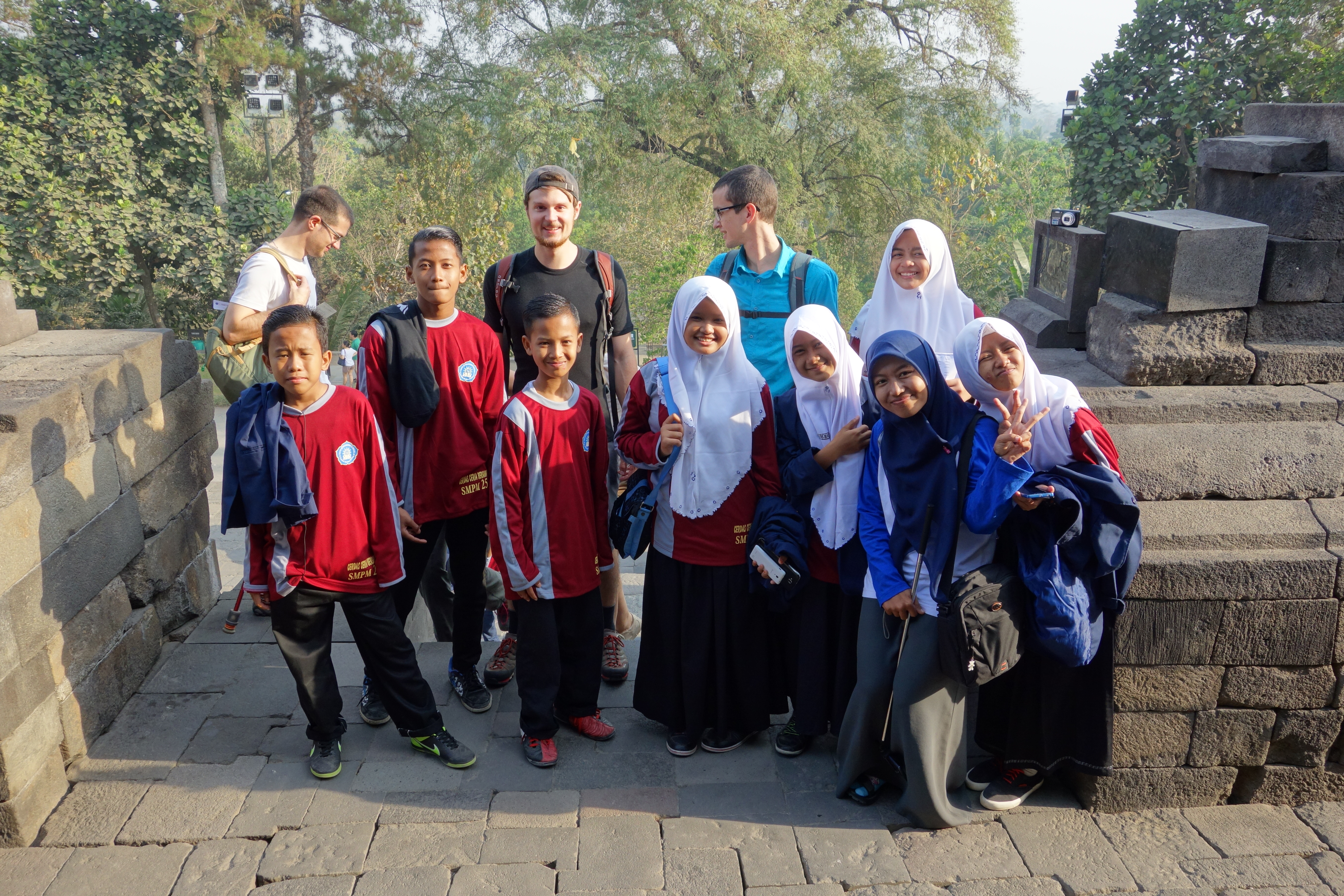
Views from the top (it faces East) and some of the 72 stupas surrounding the central dome. The shape of the stupa represents the Buddha “crowned and sitting in meditation posture on a lion throne. His crown is the top of the spire, his head is the square at the spire’s base; his body is the vase shape; his legs are the four steps of the lower terrace; and the base is his throne.”The 72 stupas each contain a Buddhist statue like this one. The main central dome, however, is intentionally left empty (the world of formlessness, remember?)They said they wanted to practice English, but I’m pretty sure they just wanted to take an infinite number of pictures with some white dudes.Grand entrance to the grand Hindu temple of Prambanan. Also contructed in the 9th century, it is the largest Hindu temple in Indonesia.
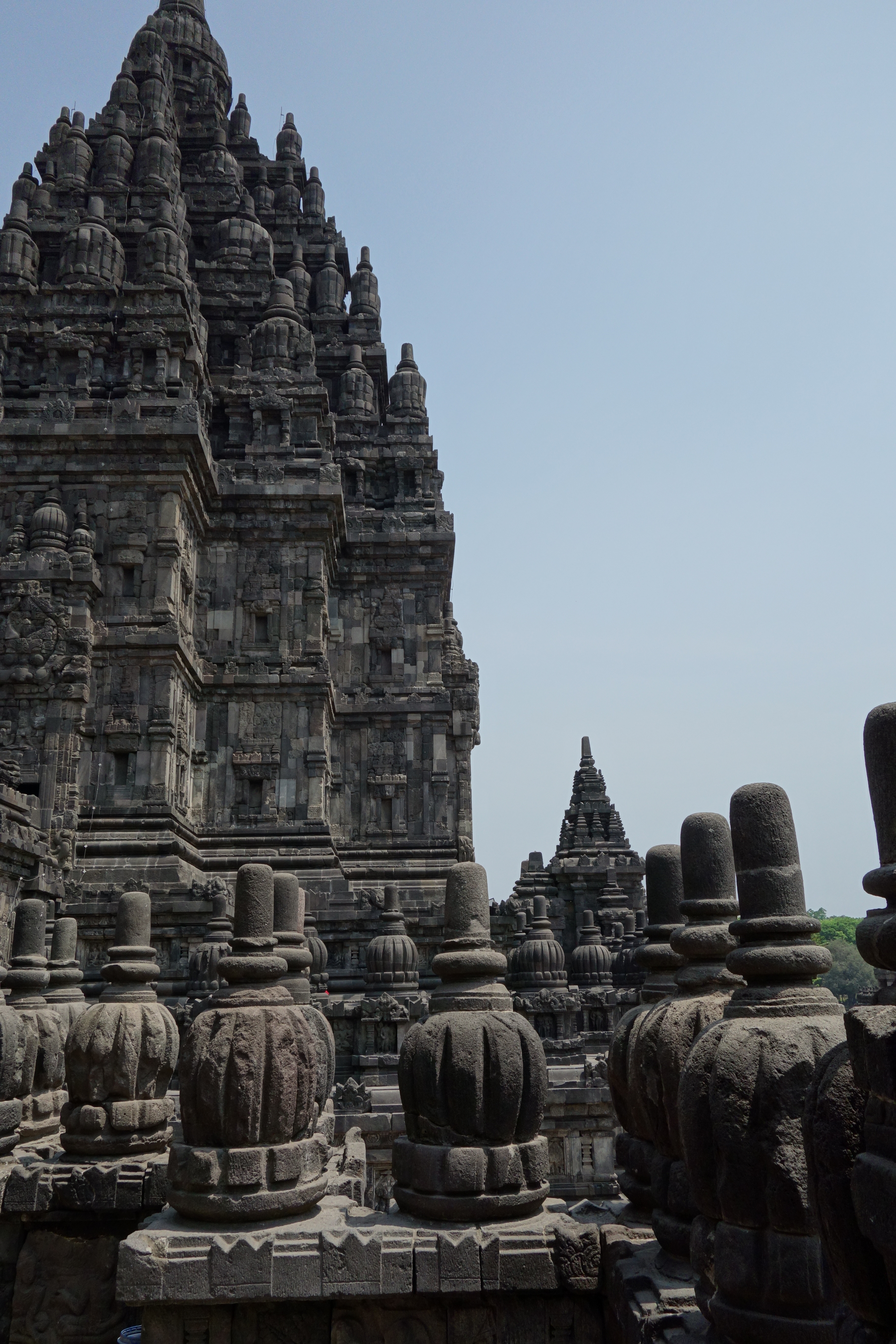
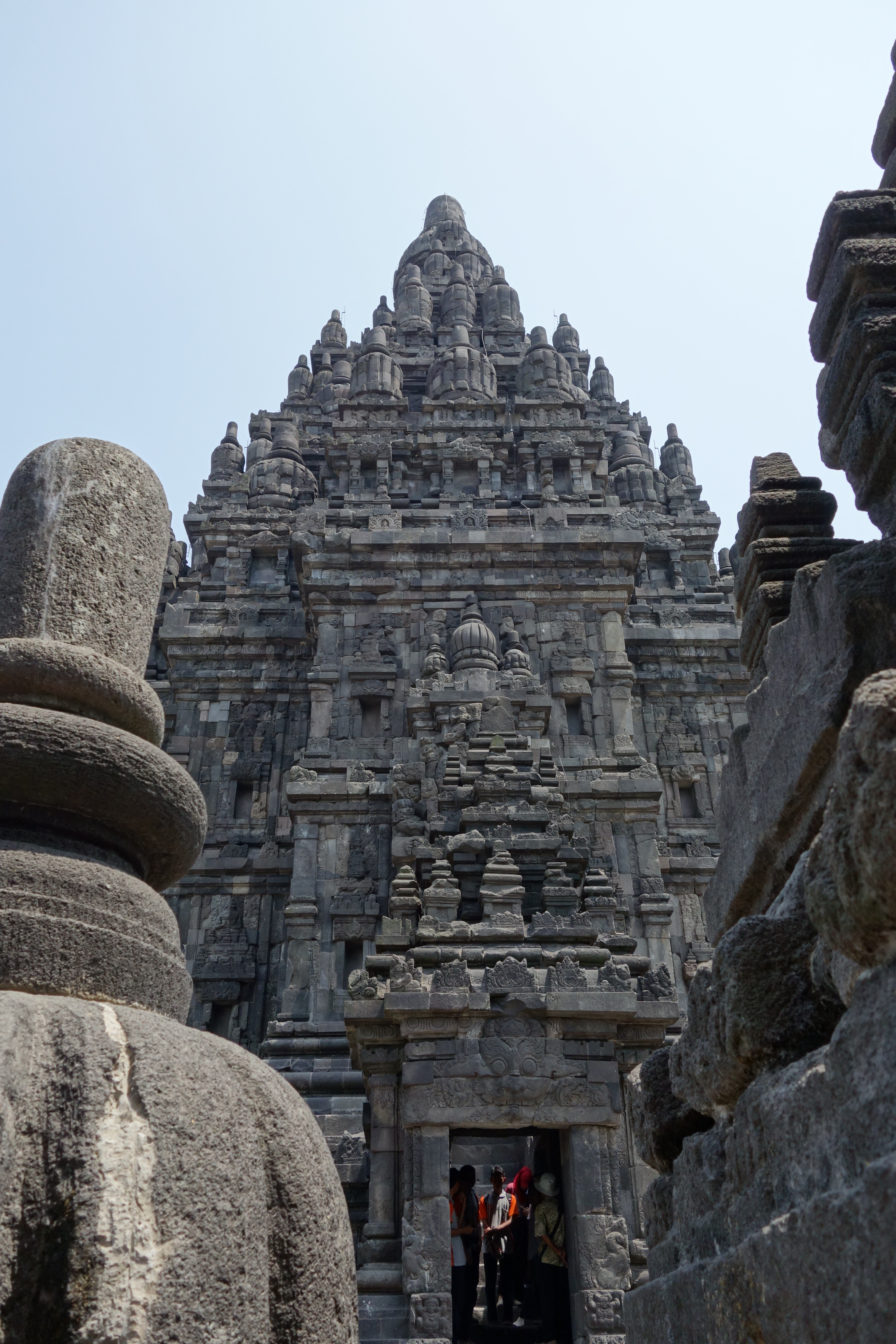
This shape is found everywhere in Hindu art and architecture, and is very reminiscent of a Buddhist stupa. In Hindu tradition, however, it is a representation of the unity of man and woman which together forms Life.The temple complex is dedicated to the Trimurti, an expression of the main Hindu god as a Creator (Brahma), the Preserver (Vishnu) and the Destroyer (Shiva). Like Borobodur, there are three distinct levels. The lowest is Bhurloka, occupied by mortals, animals and demons; next is Bhuvarloka occupied by holy people and lesser gods; and finally Svarloka, the highest and holiest realm of the gods themselves. The lowest level (in the foreground) is in ruins.
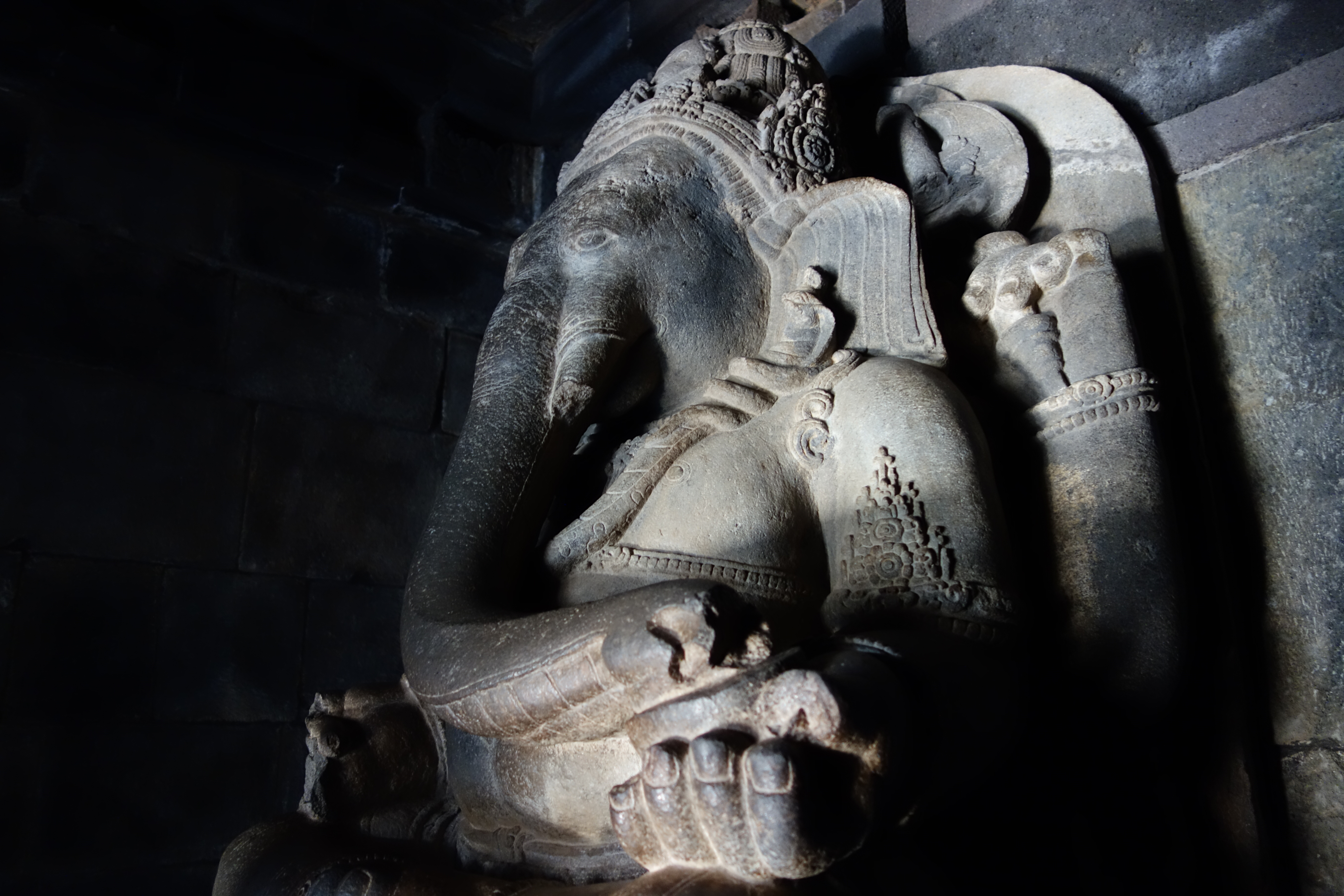
It is amazing to me that the massive and ornate stone structures sole purpose is to house one statue in each. There is a single staircase that leads to a small room with the statue, and 150 feet of structure rises overhead. It is also incredible that the buildings are structurally sound when they are comprised of thousands of relatively small, individual stone blocks (taken from the nearby Merapi volcano) and no cement material. Here is the statue of everyone’s favorite elephant headed god, Ganesha.
Finished off the day with some Boa and Cobra. The boa was basically like eating boneless chicken strips. The cobra was like eating the boniest fish imaginable. I know which one I’m getting next time!
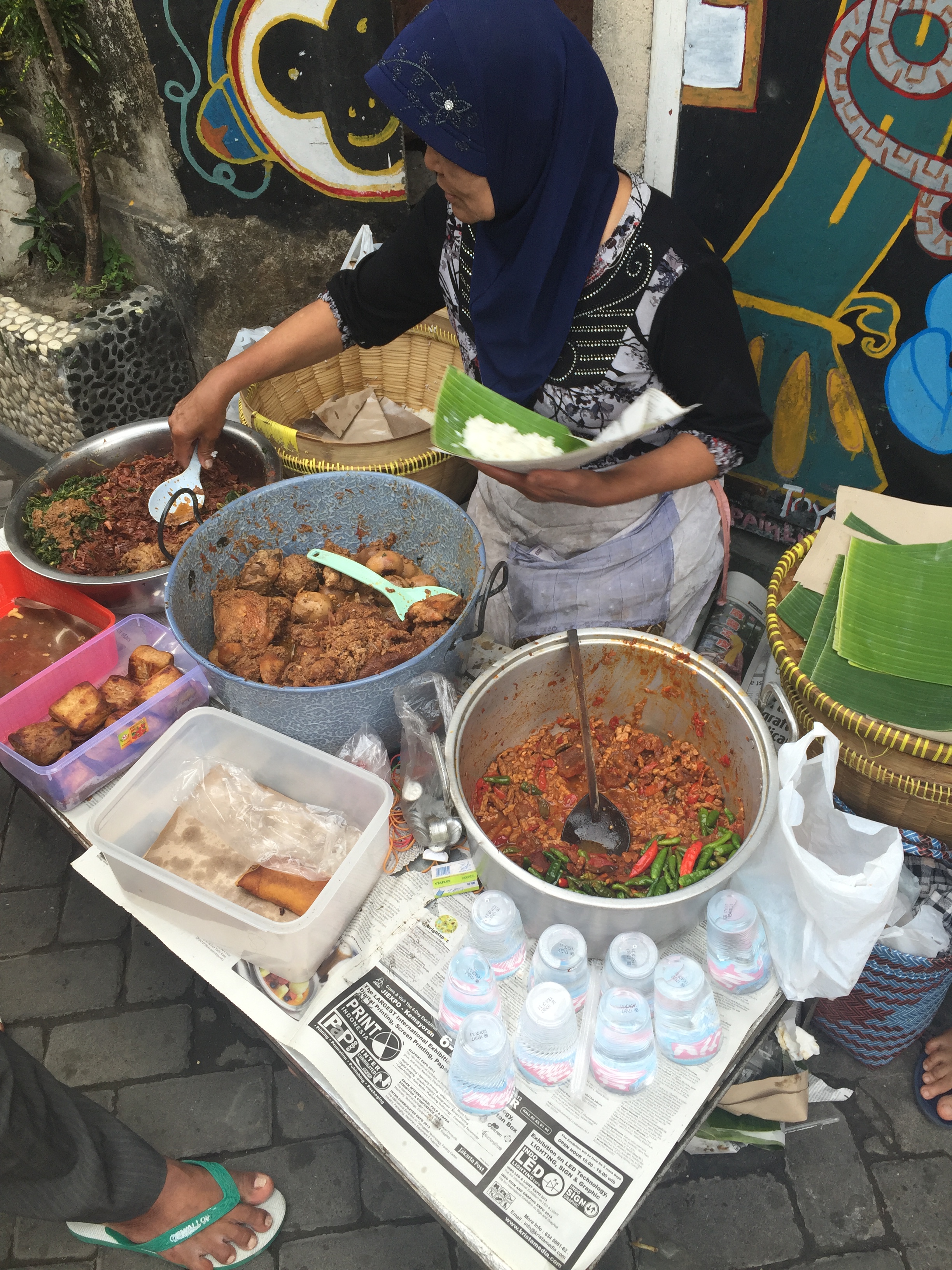
Here is the “gang” my hostel was in and breakfast served right outsid the front door. Its a Jogja specialty called Gudeg and is composed of all the Indonsian food groups: meat and rice.
One thought on “Yogyakarta (and around), Java, Indonesia”
Far out, solid and…….down right cool! : ) The path from the past that you just took us down brings out the ancient in me! Ha ha! Kidding aside, those structures are mind blowing considering how long ago they were built and the equipment (or lack of) with which they were constructed – not to mention the geo-technical engineering that must have been applied to keep them on solid ground! ; ) I’m still thinking about cobra and WHY anyone would eat it! Good for you for giving it a try! So enjoying the trip! Safe travels and much love! XO







 potravels
Far out, solid and…….down right cool! : ) The path from the past that you just took us down brings out the ancient in me! Ha ha! Kidding aside, those structures are mind blowing considering how long ago they were built and the equipment (or lack of) with which they were constructed – not to mention the geo-technical engineering that must have been applied to keep them on solid ground! ; ) I’m still thinking about cobra and WHY anyone would eat it! Good for you for giving it a try! So enjoying the trip! Safe travels and much love! XO
LikeLike